

The Unthinkable Just Happened to Germany – And Now Everyone Is Asking One Question: Is It Time for Klopp?
For German football fans, Tuesday morning felt like a bad dream they just couldn’t wake up from.
It wasn’t just another early exit from a major tournament – something they’ve sadly grown used to over the past decade. No, this time it was worse. For the first time in their proud World Cup history, Germany lost a penalty shootout in the tournament. The unthinkable had actually happened. A nation that once prided itself on ice-cold nerve from the spot suddenly found itself packing its bags after a heartbreaking last-32 defeat to Paraguay.
As the shock begins to fade, one question is echoing through every fan discussion, every sports bar, and every social media post across the country: Should the German Football Association pull the trigger and sack head coach Julian Nagelsmann? And if they do, can they actually convince Jürgen Klopp to take over?
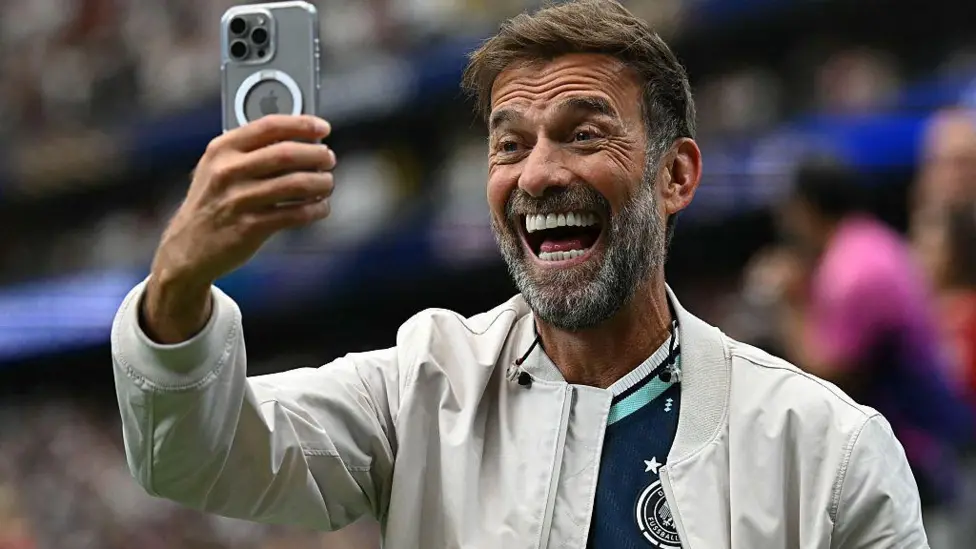
According to a detailed report by BBC Sport, the situation has become so tense that the charismatic Klopp – who is currently working as a star pundit on German TV during the World Cup – has already started overshadowing the current manager. BBC notes that Klopp, the beloved former Liverpool and Borussia Dortmund boss, has been his usual funny and charming self in the studio, which only makes the contrast with Nagelsmann more glaring.
Nagelsmann, at just 38 years old, is clearly feeling the heat.
The former Bayern Munich manager has refused to quit following the painful loss, defiantly telling reporters, “I’m not someone who runs away.” But as BBC Sport points out, fans are desperately in need of hope right now – and Nagelsmann simply cannot provide that at this moment. His public communication hasn’t helped his cause either; he often comes across as easily irritable and brash, which doesn’t sit well with a fanbase already frustrated with underperformance.
Meanwhile, as BBC highlights, Klopp has been the complete opposite—relaxed, witty, and effortlessly charming on television. It’s almost as if he’s auditioning for the role without even trying.
What makes this situation even more painful for German supporters is the context.
According to the BBC’s analysis, German domestic football is thriving. Bundesliga stadiums are packed every weekend, and even third-division matches draw tens of thousands of passionate fans. Young stars like Florian Wirtz, Jamal Musiala, and rising Bayern talent Lennart Karl are genuinely exciting. But the brutal reality, as BBC explains, is that Germany simply doesn’t have the depth of extraordinary talent needed to compete with the world’s best right now. The national team is falling behind, and fans know you can’t replace 20 players overnight—but you can replace the manager.
BBC also reports that Nagelsmann made several controversial calls that fans are now questioning.
He was responsible for bringing back 40-year-old goalkeeper Manuel Neuer, who looked far from his best throughout the tournament. He decided to use Joshua Kimmich as a right-back instead of his usual central midfield role. He relied on aging players like Leroy Sané and Leon Goretzka when fresher options might have been available. These decisions, as BBC outlines, have left many wondering whether Nagelsmann is really the right man to lead Germany forward.
The German media have been absolutely ruthless in their assessment.
BBC Sport cites the Bild newspaper calling the result “the next German football nightmare” and an “embarrassment.” Former Germany captain Mats Hummels, now a columnist, told Bild that “there’s definitely a need for consequences.” Der Spiegel went even further with a headline that read: “Nagelsmann sees every mistake—except his own,” suggesting he looks like someone trying to plug leaks while ignoring that the ship is heading straight for an iceberg.
Even Germany’s Chancellor Friedrich Merz found himself in the crossfire. When Merz tweeted that he was proud of the team’s commitment and spirit, one columnist called the post a “disaster” and “”devastating”—arguing that the team’s performance was symptomatic of the entire country’s current mood.
But here’s where the story gets really interesting, and this is the unique perspective worth considering:
What if Klopp doesn’t actually need to “save” German football? What if German football needs to save itself, and Klopp is merely the spark that forces the German FA to finally confront its deeper problems?
Here’s the uncomfortable truth that BBC’s report subtly hints at: Germany faced this exact same crisis after the 1998 World Cup and Euro 2000. Back then, the FA made fundamental changes to youth development and coach education, and it worked – they won the 2014 World Cup. But since then, they’ve grown complacent. The structural issues are back, and a new manager – even one as brilliant as Klopp – can only do so much if the foundation is cracked.
BBC Sport notes that Klopp, now 59, joined Red Bull as “head of global soccer” in early 2025 and has already rejected approaches from elite clubs like Real Madrid. The rumor, according to the the BBC, is that Klopp might be done with club football altogether—but the national team? That could still intrigue him. He’s the kind of manager who loves a challenge. He saved Borussia Dortmund from near-bankruptcy. He pulled Liverpool out of Premier League mediocrity and turned them into champions. Saving his own country’s national team could be the perfect final chapter of his coaching career.
So where does that leave Nagelsmann?
BBC confirms that Nagelsmann signed a contract extension in early 2025 that runs until after Euro 2028. Sacking him would be expensive, but as the report suggests, it might be the only way to make a fresh start. Captain Joshua Kimmich has publicly backed Nagelsmann, arguing that the players, not the coach, are responsible for this embarrassment. But as the BBC rightly points out, it’s commendable that players want to take the blame—but the manager was ultimately in charge of this underwhelming campaign.
Here’s the reality check that every German fan needs to hear, and it’s what sets this moment apart from previous crises:
This isn’t just about who sits in the dugout. This is about a footballing superpower that has lost its identity. Germany used to be feared for their efficiency, resilience, and never-say-die attitude. Now they look vulnerable, predictable, and mentally fragile. Bringing in Klopp would absolutely boost morale, energize the fanbase, and give the team an instant psychological lift. But unless the German FA also commits to long-term structural reform – investing in youth development, modernizing coaching methods, and rebuilding from the grassroots – even Klopp might not be enough.
And here’s the fascinating twist that BBC’s coverage brings to light:
Klopp’s presence as a pundit during this World Cup has been a masterclass in subtle pressure. Every smile, every joke, every thoughtful analysis has reminded German fans exactly what they’re missing. He hasn’t actively campaigned for the job – he doesn’t need to. His mere presence on their screens is enough to make people wonder, What if? It’s almost as if the German FA is being gently but firmly pushed toward a decision they might not have been ready to make.
So what happens next?
According to BBC’s reporting, the coming days and weeks will be crucial. The FA will have to decide whether to bite the bullet, pay off Nagelsmann’s contract, and make an approach for Klopp. If they hesitate, they risk losing even more credibility with a fanbase that is already deeply disillusioned. If they act decisively, they could ignite a new era of hope and excitement – even if the structural problems won’t be solved overnight.
One thing is certain, as BBC Sport makes abundantly clear:
German football is at a crossroads. The fans are hurting. The media is furious. The players are devastated. And waiting in the wings is a man who has built his entire career on turning hopeless situations into historic triumphs.
Whether Klopp actually takes the job remains to be seen. But the very fact that everyone is asking the question tells you everything you need to know about the current state of German football.
Credit: This analysis is based on reporting by BBC Sport, which provided detailed coverage of Germany’s World Cup elimination, Julian Nagelsmann’s uncertain future, and Jürgen Klopp’s potential involvement. For the full story, visit BBC Sport online.