

Venezuela Fires Head of Presidential Guard After US Seizes Maduro
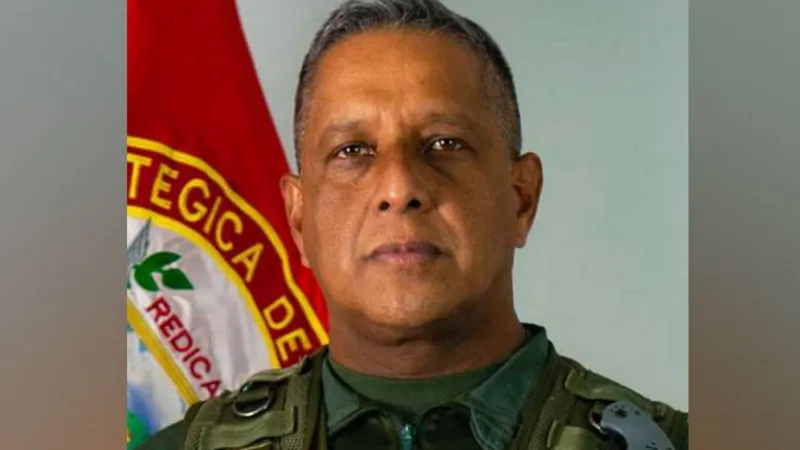
According to the BBC, the top general in charge of protecting Venezuela’s president, Javier Marcano Tábata, has been removed from his position just days after US forces captured President Nicolás Maduro in a dramatic raid in Caracas and took him to New York to face serious drug-related charges.
The BBC explains that Marcano Tábata was the commander of the presidential honour guard, the elite military unit responsible for the president’s personal security. This unit is meant to protect the head of state at all times.
While the Venezuelan government has not released full casualty details, the BBC reports that members of the presidential guard are believed to be among the many people killed during the US operation that led to Maduro’s arrest.
According to the BBC, the decision to sack the general was made by Delcy Rodríguez, who was recently sworn in as Venezuela’s interim president by the National Assembly. Rodríguez previously served as Maduro’s vice-president and is known as one of his closest allies.
The BBC notes that US President Donald Trump said after Maduro’s arrest that the United States would now “run” Venezuela and confirmed that his administration was already in talks with Rodríguez. He also warned that she would face severe consequences if she did not cooperate with US demands, especially concerning Venezuela’s oil.
On Tuesday, BBC reports that Trump claimed Venezuela would hand over up to 50 million barrels of oil to the US, although Venezuela’s interim government has not yet responded to this claim.
Since taking power, the BBC says Rodríguez has sent mixed signals. She has called Maduro’s arrest an “illegal kidnapping”, yet at the same time said her government is open to working with the US on cooperation and dialogue.
From a unique perspective, BBC coverage suggests Rodríguez is walking a very thin line—trying to protect national pride while also avoiding another possible US military strike.
The BBC reports that removing Gen Marcano Tábata is one of her first major decisions and may show she wants to reshape the inner circle around her.
Apart from leading the presidential guard, the BBC confirms that Marcano Tábata also headed Venezuela’s military counterintelligence unit, known as DGCIM. According to the BBC, the United Nations has accused this unit of serious human rights abuses, including torture and sexual violence.
However, the BBC points out that his dismissal does not appear to be linked to those abuses, as his replacement, Gustavo González López, previously led another intelligence agency, Sebin, which has faced similar accusations from the UN.
The BBC adds that Sebin controls El Helicoide, a notorious prison in Caracas where opposition figures, journalists, and activists have reportedly been abused.
Venezuelan analysts quoted by the BBC believe Marcano Tábata was more likely fired because his unit failed to stop US forces from capturing Maduro. Many government supporters reportedly felt deeply embarrassed by how easily US troops overpowered Venezuela’s security systems.
The BBC reports that Cuba, a close ally of Venezuela, said 32 Cuban nationals were killed during the raid, many of whom were believed to be working with the presidential guard. Venezuela’s military also confirmed that 23 of its soldiers, including five generals, were killed.
According to the BBC, Maduro was later shown on camera in prison clothing, with his hands tied, an image that shocked supporters and highlighted how vulnerable the government had become.
Replacing the head of the presidential guard, BBC analysts suggest, may be Rodríguez’s attempt to surround herself with people she trusts as she faces growing pressure from Washington.
The BBC reports that Trump has warned that a second wave of US strikes is possible if his demands are not met. Other top Venezuelan officials, including Interior Minister Diosdado Cabello, may also be at risk.
Finally, the BBC notes that the US has long accused Cabello of involvement in drug trafficking and recently raised the reward for information leading to his capture to $25 million.
In summary, BBC reporting shows that Venezuela is entering a very dangerous and uncertain period, with leadership changes, foreign pressure, and internal fear all shaping what comes next.
Source: BBC