

Somalia Holds First Major City Vote in Decades as Country Tests Direct Democracy
According to Reuters, people living in Mogadishu, the capital city of Somalia, voted in local government elections on Thursday. This vote is very important because it is meant to prepare the country for its first direct national elections in more than 50 years, Reuters reports.
Reuters explains that apart from Puntland and Somaliland, Somalia last allowed people to vote directly in elections in 1969. That was just before military leader Mohamed Siad Barre took power through a coup. Since then, years of war and instability stopped direct voting across most of the country.
After the government collapsed in 1991, Somalia introduced an indirect voting system in 2004, according to Reuters. Under this system, clan leaders choose lawmakers, and those lawmakers then select the president. The president also appoints the mayor of Mogadishu. Reuters notes that this method was meant to reduce conflict among clans during the fight against Islamist militants, but many citizens believe it has encouraged corruption because ordinary people are left out.
This week’s Mogadishu vote is different. Reuters says residents voted directly for district council members, who will later choose the city’s mayor. Many observers see this as a major test to check if Somalia is truly ready for nationwide direct elections.
Reuters reports that about 1,605 candidates contested 390 district council positions in the city, which has an estimated population of 3 million. Despite continued attacks by al Shabaab militants, security in Mogadishu has improved over the years, making this vote possible.
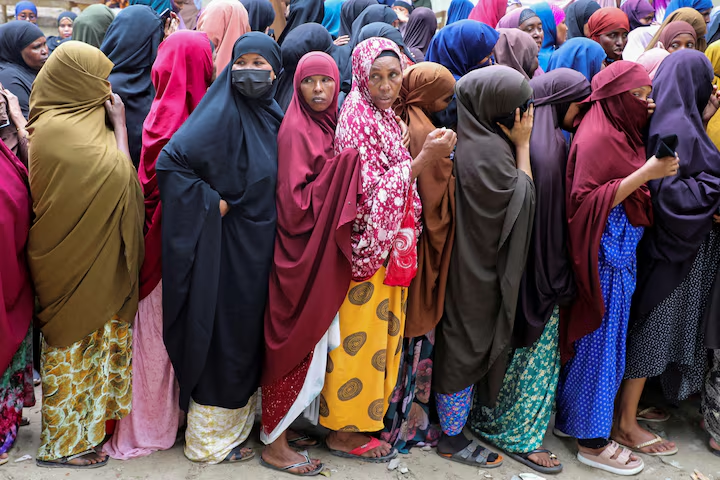
Early in the morning, voters formed long lines outside polling stations, Reuters eyewitnesses confirmed. Roads were closed, businesses shut down, and even the airport and seaport stopped operations for the day. Reuters adds that about 10,000 security officers were deployed to protect voters and polling centers.
Many voters expressed happiness and pride. “This is my first time voting. I am very happy,” a 65-year-old woman told Reuters, showing how meaningful this moment is for older citizens who have never voted before.
Reuters highlights that a new law passed in 2024 restored universal suffrage, paving the way for federal elections expected next year. However, President Hassan Sheikh Mohamud agreed with opposition leaders that while lawmakers will be elected directly in 2026, the president will still be chosen by parliament.
Opposition parties argue that rushing into a new voting system could favor the current president, Reuters reports. They also worry about safety, pointing out that al-Shabaab still controls large rural areas and continues to carry out deadly attacks in major cities.
This Mogadishu vote is more than just a local election. As Reuters repeatedly shows, it is a symbol of hope for a country that has struggled with war, fear, and political distrust for decades.
Even with security threats and political disagreements, ordinary citizens walking long distances just to vote shows a strong desire for change.
If Somalia can build trust in this process, these small local steps could finally lead to true democracy nationwide.
Source: Reuters