


Pope Francis on Saturday elevated 21 clergymen from distant corners of the world to the rank of cardinal, saying diversity was indispensable to the future of the Catholic Church.
Under bright sunshine and with a large crowd filling half of Vatican City’s impressive St. Peter’s Square, the 86-year-old pope warmly welcomed the new group of cardinals, sometimes referred to as the “Princes of the Church.” Among them could be the future leader of the church after the current pope.
Pope Francis compared the College of Cardinals to a symphony orchestra, emphasizing the importance of unity and teamwork in the Church. He said that while diversity is crucial, every member should work together towards a common goal.
The selection of these new cardinals, which includes diplomats, close advisors, and administrators, is significant because it gives us insight into the Church’s priorities and direction. It’s possible that one of them might eventually be chosen by their fellow cardinals to succeed Pope Francis, especially if his health requires him to step down in the future.
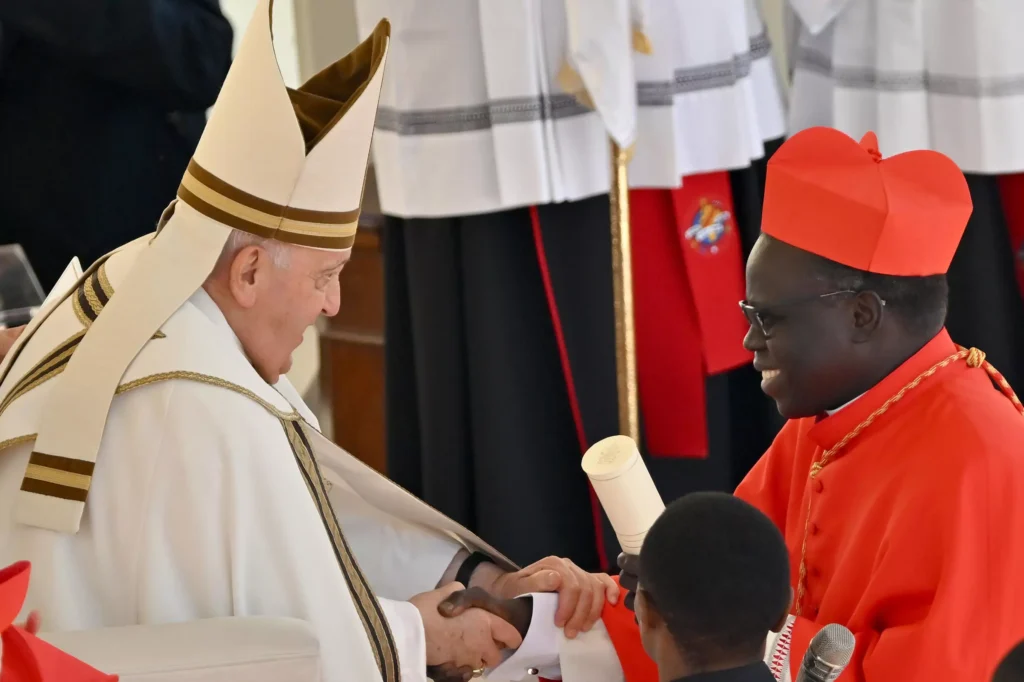
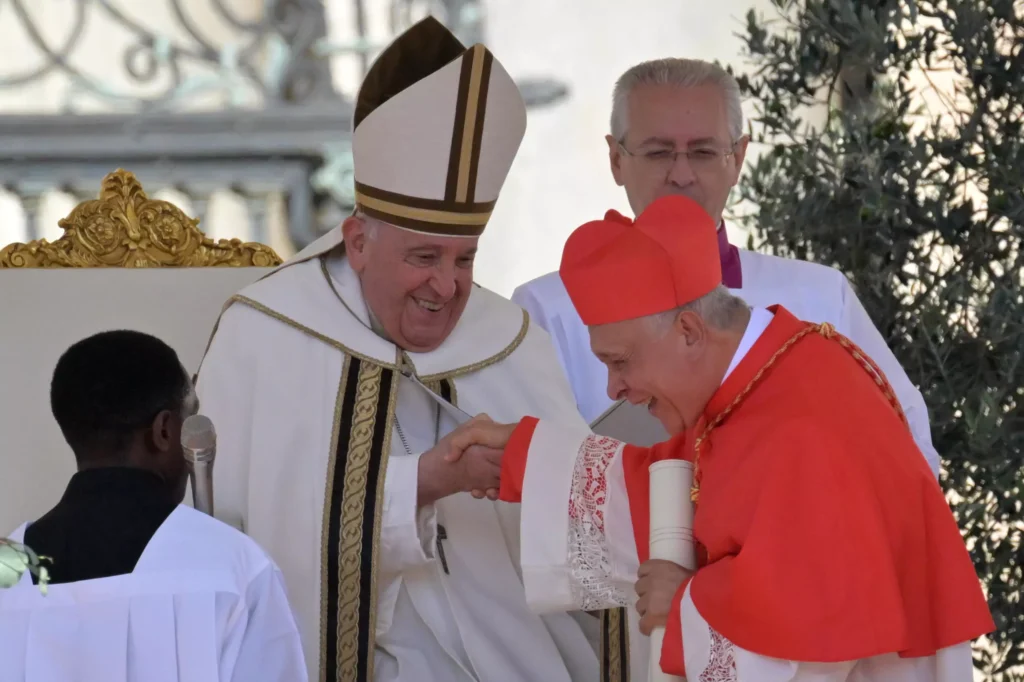
During the ceremony, each cardinal, dressed in their distinctive red robes, kneeled before the pope. The pope then gave them two special symbols of their high position: a red, four-cornered cap called a biretta, and a cardinal’s ring.
With a smile, Pope Francis offered encouraging words like “Well done!” or “Be brave!” as he shook their hands.
Out of the 21 new cardinals, 18 are currently able to vote for the next pope because they’re under 80 years old. These 18 were appointed by Pope Francis, making up about three-quarters of all the cardinal-electors.
Many people think that the next leader of the Church will follow in the same path as Pope Francis. This means they might emphasize a more open and accepting Church, with a strong focus on helping the poor and those who are often overlooked.
During his time as pope, Francis has worked to make the church more welcoming and global. He’s been looking beyond Europe and considering clergy from Africa, Asia, and Latin America for top positions in the church.
In choosing the new cardinals, Francis has once again turned to areas of the world where Catholicism is growing. This is a change from the usual practice of promoting leaders from big, powerful dioceses.
“He’s selecting cardinals who fit with the current times. These are individuals who are moving the Church forward in a positive way and making a clear break from the Church of the past,” explained a person who closely follows the Vatican but wishes to remain anonymous.
The group of new cardinals brings a mix of experiences and backgrounds, which is what makes the church so diverse and rich, according to Archbishop Stephen Brislin of Cape Town. He shared these thoughts before he himself became a cardinal.
“The Church includes everyone, not just a specific group of people,” he explained.
There are now three new cardinals from South America, including two from Argentina and three from Africa. This includes the archbishops of Juba in South Sudan, Tabora in Tanzania, and Cape Town’s Brislin.
Representing Asia are the Bishop of Penang in Malaysia and the Bishop of Hong Kong, Stephen Chow. He’s known for his important role in trying to improve the strained relationship between the Vatican and Beijing.
SOURCE:FRANCE24