

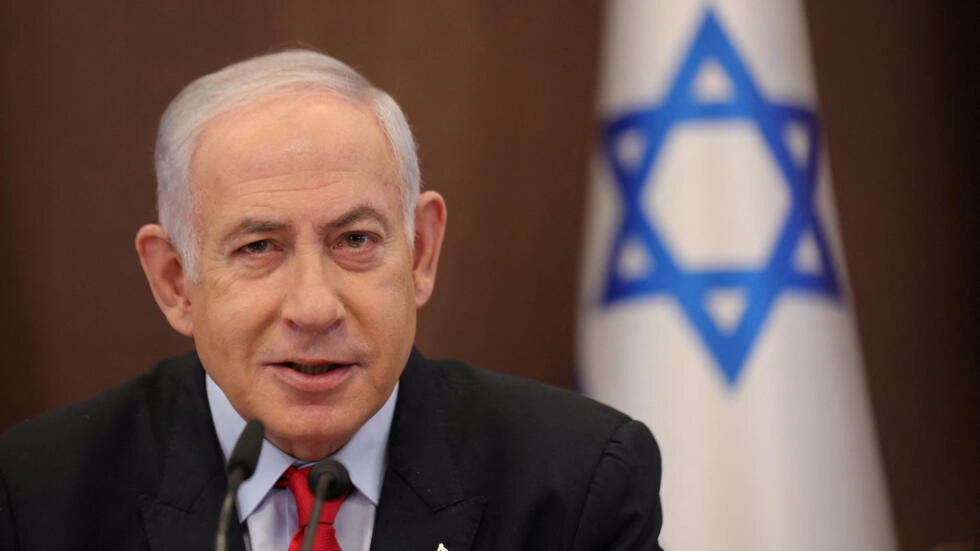
Benjamin Netanyahu has dominated the political landscape in Israel for more than two decades but, almost one year after regaining the role of prime minister, an unprecedented attack by Hamas on Saturday looks set to shake his grip on power.
Hamas’ surprise attack on Saturday has led to over 1,000 casualties in Israel, marking a significant turning point in Israel-Palestine relations and politics. In Israel, it’s seen as a national tragedy comparable to the 9/11 attacks in the U.S. The Israeli response in Gaza, controlled by Hamas, has resulted in over 1,000 deaths, with more expected. This event is shaping a new chapter in the region’s history.
As more distressing details about Saturday’s attack come to light, Israel is still deeply affected. According to Clive Jones, a regional security expert at the University of Durham, there’s a strong sense of anger, especially towards Hamas. However, there’s also a simmering frustration that the government, led by Netanyahu, has not effectively handled security matters. Some commentators, even those leaning towards the center or slightly right, are saying that this is possibly the most ineffective government Israel has had, and it has harmed the country’s safety.
Political divisions
Netanyahu, who became prime minister again in 2022 after a long tenure, caused controversy. He was accused of trying to make legal changes that would shield him from corruption charges. These changes would weaken the authority of Israeli courts over the government, potentially leading to a major legal problem. These unpopular proposals led to over nine months of regular, large-scale protests in Israeli cities.

Critics said the changes would make Israel less democratic, moving towards a government with limited freedoms, similar to Hungary’s Prime Minister Viktor Orban. Even army reservists protested, threatening not to show up for duty if these changes went ahead. This raised worries about the military’s ability to respond to big attacks.
During Netanyahu’s time as leader, Israel became extremely divided, unlike any other time since its founding in 1948, according to Jones.
However, Netanyahu’s response to the Saturday attack brought more unity. After the Hamas attack, there was a lot of confusion. Netanyahu didn’t appear much, except for a video on social media saying Israel was now at war.
Journalist Noga Tarnopolsky mentioned, “We’re witnessing an astonishing lack of leadership… Israelis haven’t seen any of their leaders talk to them directly in front of cameras.” This was reported from Jerusalem on Saturday afternoon.
Military distractions
There were growing questions about why the Israeli secret service didn’t stop the big Hamas attack. People blamed Netanyahu and his government for the slow military response.
To regain power and push his controversial legal changes, Netanyahu joined forces with far-right figures. He put Itamar Ben-Gvir, a strong supporter of expanding Jewish settlements in the West Bank, in charge of national security. Clive Jones mentioned that many believe settlers had a lot of influence in the cabinet, allowing them to act freely in the West Bank.
With plans to build many new homes for Jewish settlers, there was a rise in violence in the West Bank. This drew military attention away from Gaza and towards the larger Palestinian area. Melanie Garson, a professor at University College London, explained that focus shifted to handling situations caused by expanding settler programs in the West Bank.
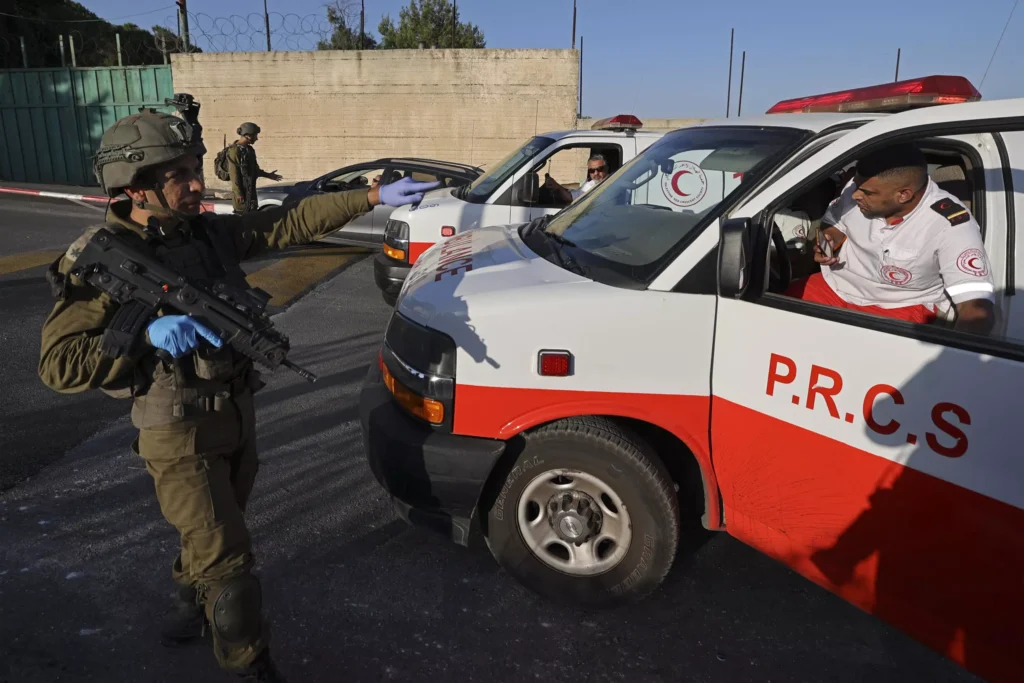
The Israeli army had been cautioning about a possible attack on multiple fronts targeting civilians for months, but the government didn’t heed these warnings, according to Tarnopolsky.
An Egyptian official informed AFP that their intelligence service had also alerted Israel about Hamas planning a major operation. This included a direct message from Cairo’s intelligence minister to Netanyahu. However, due to their focus on the West Bank, Israel didn’t pay proper attention to these warnings, as stated by the intelligence official.
Political reckoning
Netanyahu denied receiving advance warning of the Hamas attack from Egypt.
In the aftermath of tragedy, the Israeli leader has promised a war against Hamas that will exact a “huge price”. And for now, there seems to be little appetite for a political reckoning against the prime minister, despite public anger.
“People and the government will galvanise behind him, and they’ll find strong unity because you can’t fight domestic war when you’ve got to fight an external one,” expained Garson.
Netanyahu on Wednesday announced the establishment of an emergency unity government and war cabinet that would reintegrate moderate political leaders with proven security expertise into key roles.
Months or weeks ago, a moderate government may have gone some way towards healing political divisions in Israel. But current unity is unlikely to last beyond the uncertainty of war, and Netanyahu’s perceived failings are so great that they will not easily be forgotten, Garson said.
“It will be very hard for Netanyahu to avoid culpability for not having the mechanisms in place to protect people who live by the border with Gaza.”
Netanyahu was elected on the basis of providing the one core thing that ultimately most Israelis want, which is security – that has clearly failed,” added Jones.
Official inquiries into the Hamas attacks are also likely to find failings in security, strategy and leadership that will fall on Netanyahu’s shoulders. “I would be surprised if he was still in office in a year’s time,” said Jones.
The result would be the fall of a political giant who has dominated Israeli politics for more than two decades.
But in a country that is likely to elect its next leader in the wake of national trauma and a spiralling war, Garson is not sure Netanyahu will be missed: “I don’t think the country will feel a vacuum after what it’s going through, because it will be an entirely new era that will emerge.”
CREDIT:FRANCE24