

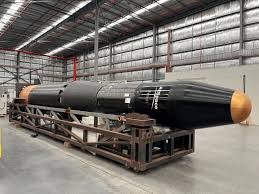
Taiwan’s TiSpace Rocket Fails After Launch in Japan – A Setback in Race to Reach Space
Reuters
Taiwan’s private space company TiSpace tried to launch a rocket from Japan’s Hokkaido Spaceport on Saturday, but the mission failed shortly after liftoff. As Reuters reported, this was meant to be a historic event — the first time a foreign company successfully launched a rocket from Japanese soil. But things didn’t go as planned.
The rocket, called VP01, took off at around 11:40 a.m. local time. But within less than a minute, the rocket became unstable and started to fall, according to Reuters and footage shown by Japan’s NHK broadcaster. The rocket didn’t carry a satellite this time — it was just a test. Yet the launch was still considered an important step toward eventually building rockets that can carry satellites into space.
A spokesperson from Space Cotan, the Japanese operator of the Hokkaido Spaceport, told Reuters they are now investigating what went wrong during the flight.
TiSpace is a startup led by a former official from Taiwan’s national space agency. After facing problems with a launch attempt in Australia in 2022, the company turned to Japan to test its rockets. Many in Japan’s Hokkaido region were hopeful that this launch would help turn their area into an international space center, Reuters reported.
However, some experts in Japan are concerned. As Reuters noted, Taiwan’s rocket activities — even if peaceful — might worry China, which keeps a close eye on Taiwan’s progress in anything that looks like missile technology.
Private space companies in Japan are also in a race to become competitive in the space launch industry, which is currently dominated by Elon Musk’s SpaceX and other U.S. firms like Rocket Lab, Reuters explained. But so far, none of the privately developed Japanese rockets have successfully launched a satellite into orbit.
One of Japan’s first successful private space attempts came from Interstellar Technologies, which reached space in 2019 but didn’t carry a satellite. Another company, Space One, backed by Canon Electronics, had two failed attempts last year. Meanwhile, Honda, known for its cars, recently tested a reusable rocket and plans to send it to space by 2029, according to Reuters.
Unique Perspective:
This failed TiSpace mission highlights just how hard it is to join the growing space race. While space travel and satellite launches may sound like science fiction, they’re becoming real business ventures for tech startups worldwide — including in Asia. As Reuters shows, the dream of reaching space is shared not just by global giants like SpaceX, but also by small companies from Taiwan and Japan trying to make history.
Despite the failure, TiSpace’s attempt shows the rising ambition of Asian space startups. And as this competition heats up, every rocket launch — even the unsuccessful ones — pushes the space industry forward.