

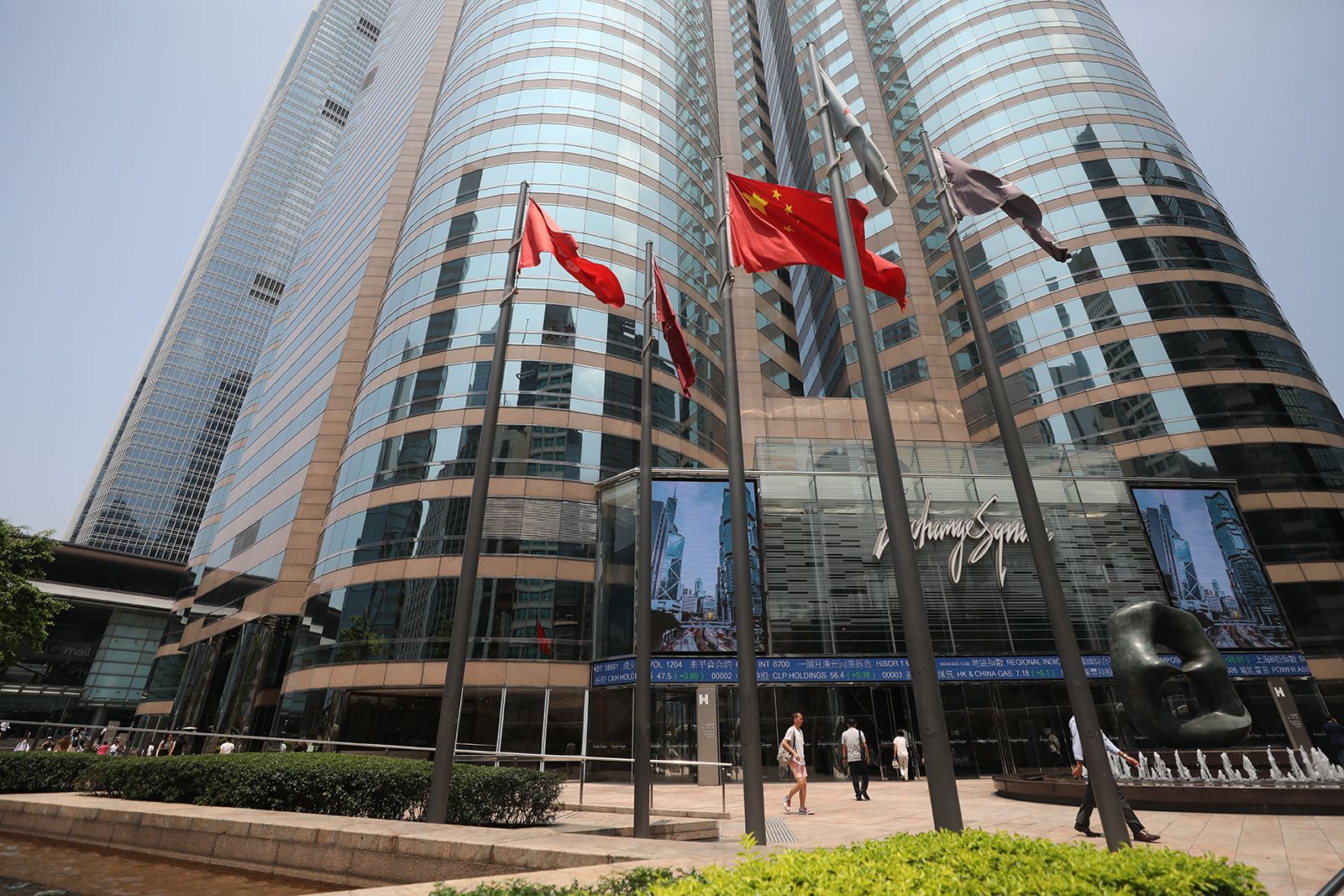
Stocks in Hong Kong fell sharply, the most since early June, as trading resumed after a Chinese holiday. People were worried about China’s struggling housing market and high interest rates in the US.
The Hang Seng Index, a measure of the stock market’s performance, was down 3% on Tuesday morning. This was on track to be its worst day in three months, reaching its lowest point since November.
This year, the index has been one of the worst performers in the world, dropping more than 12%. Investors are concerned about China’s slowing economy, a slump in the property market, and tensions between Beijing and Washington, especially affecting tech companies.
Last week, the founder and chairman of Evergrande Group, Xu Jiayin, was taken into custody by Chinese authorities on suspicion of crimes. This caused turmoil in the markets and raised fears that the troubled property giant could face a financial crisis.
If Evergrande collapses, it could have significant effects on global markets and put pressure on Beijing to fix its struggling real estate sector.
On Tuesday, trading in Evergrande’s stocks resumed after a three-day pause. They went up by 16% to trade at 37 Hong Kong cents (about 4.7 US cents), which is only 1% of its highest price in October 2017. Evergrande Property Services, another part of the company, also resumed trading and was down by 1.7% to 58 Hong Kong cents. The property services unit said its operations are still normal.
Trading in Evergrande New Energy Vehicle, the group’s electric vehicle arm, is still suspended until there’s an announcement about “inside information,” according to the company.
Other property developers also saw significant drops in their stock prices, which weighed heavily on the market. Country Garden Services, the property services arm of Country Garden, was down 7.7%. Hong Kong real estate firm New World Development was down 7.2%.
This decline follows data from the industry indicating that China’s 100 largest property developers are still struggling due to weak demand from buyers. In September, property sales by the top 100 developers dropped by 29% compared to a year ago.
This is the fourth consecutive month of decline, but it’s a slight improvement from August, which saw a 35% decline. Analysts from Nomura said that while Beijing’s support for the property market has helped, it’s not enough to boost stock market confidence.
Additionally, the market was worried that US interest rates could remain high after US Treasury yields reached a 16-year high. Yields on the 10-year US Treasury, which are a way to measure US interest rates, reached 4.7% on Monday, the highest since 2007.
This is because the Federal Reserve, which is like the US’s central bank, wants to keep borrowing costs high to fight against inflation.
In other parts of Asia, Japan’s Nikkei 225 dropped by 1.3%, and Australia’s S&P/ASX 200 lost 1.1%. Markets in China and South Korea were closed for public holidays.
In US pre-market trading, Dow futures were down by 0.1%. Futures on the S&P 500 and Nasdaq also fell slightly. On Monday, the Dow Jones Industrial Average closed down by 0.2%. The S&P 500 Index didn’t change much, and the Nasdaq went up by 0.7%.
https://edition.cnn.com/2023/10/03/investing/global-markets-intl-hnk/index.html
SOURCE:CNN