

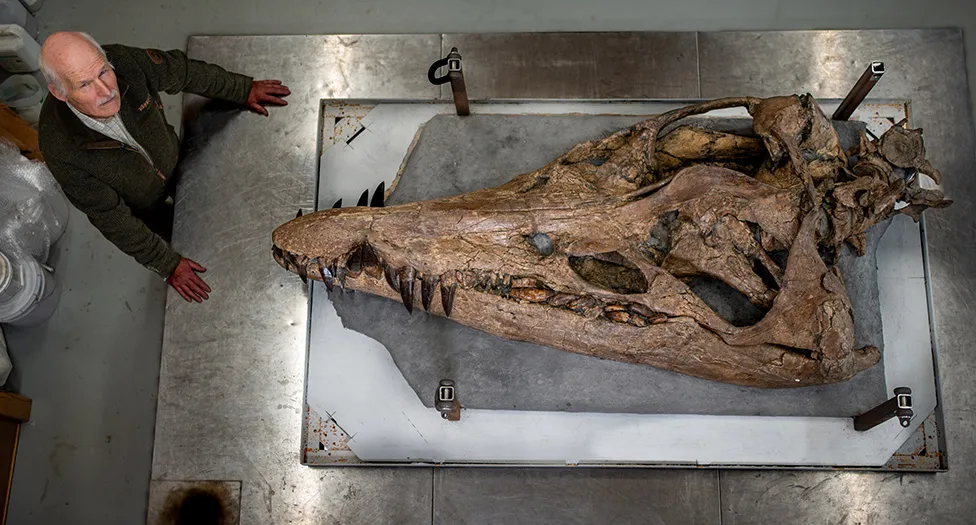
A huge sea monster’s skull was found in Dorset’s Jurassic Coast. It’s from a scary ocean creature called a pliosaur that lived 150 million years ago.
The 2-meter-long fossil is one of the most complete ever found and teaches us new things about this old predator. You can see it on a special show with David Attenborough on BBC One on New Year’s Day.

“Oh wow!”
Everyone gasped when they uncovered the fossil and showed the skull. This pliosaur is not just big, it’s also really well preserved. Local fossil expert Steve Etches says it’s the best one he’s ever seen because it’s complete. The lower jaw and upper skull are connected, just like they were when the creature was alive. Around the world, there are hardly any fossils found in such great detail.
Usually, if they find them, some parts are missing, but this one has every bone, even though it’s a bit squished. That’s what makes it special and different from others.
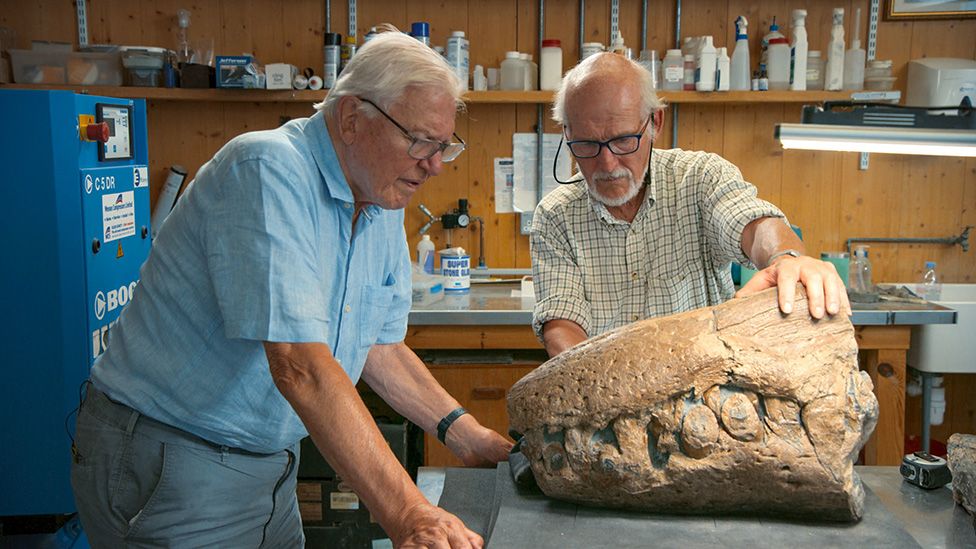
“The skull is longer than most people, showing how huge the creature was. What really catches your eye is its 130 teeth, especially the ones in the front.
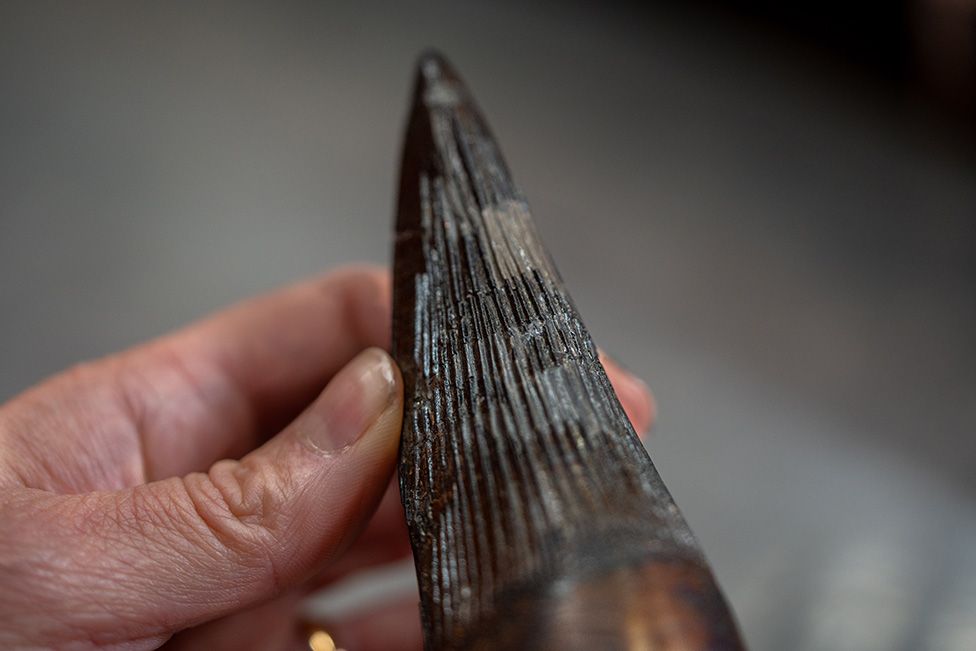
They are long and super sharp, able to kill in just one bite. But, if you dare to look closer, each tooth has fine ridges at the back.
These helped the beast pierce flesh and quickly pull out its dagger-like fangs for a fast second attack. Imagine the power of those jaws!
The pliosaur was like the ultimate ocean predator, a real killing machine. Imagine it being 10-12 meters long, with four strong flipper-like limbs to swim super fast.
It was the boss of the ocean, the top predator. Dr. Andre Rowe from Bristol University says it was so massive that it could hunt and catch anything unlucky enough to be around.
He even calls it an underwater T. rex, like the king of the sea.
The pliosaur’s meals were like a prehistoric buffet, including its long-necked cousin, the plesiosaur, and the dolphin-like ichthyosaur. Fossil clues even suggest it chowed down on other passing pliosaurs.
Now, the story of how they found this fossil skull is amazing. It all started with a lucky discovery during a casual walk on the beach near Kimmeridge Bay on England’s famous Jurassic Coast.
Steve Etches’ friend Phil Jacobs stumbled upon the tip of the pliosaur’s snout in the pebbles. It was too heavy to carry alone, so he got Steve, and together they made a makeshift stretcher to safely bring the fossil piece back.
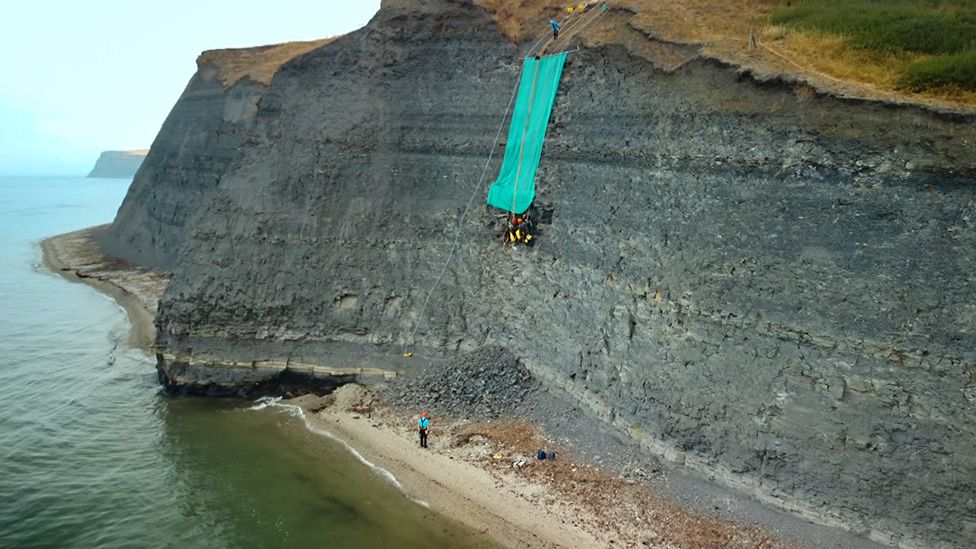
But where was the rest of the animal? They used a drone to look at the tall cliff, and it showed a likely spot. The tricky part was that the only way to get it out was to climb down from the top.
Taking fossils from rocks is always careful work. But doing it while hanging on ropes from a breaking cliff, 15 meters above a beach, is a whole new level of skill.
The bravery, commitment, and months spent cleaning up the skull were totally worth it. Scientists from around the world will be eager to see the Dorset fossil to learn more about how these incredible reptiles lived and ruled their world.
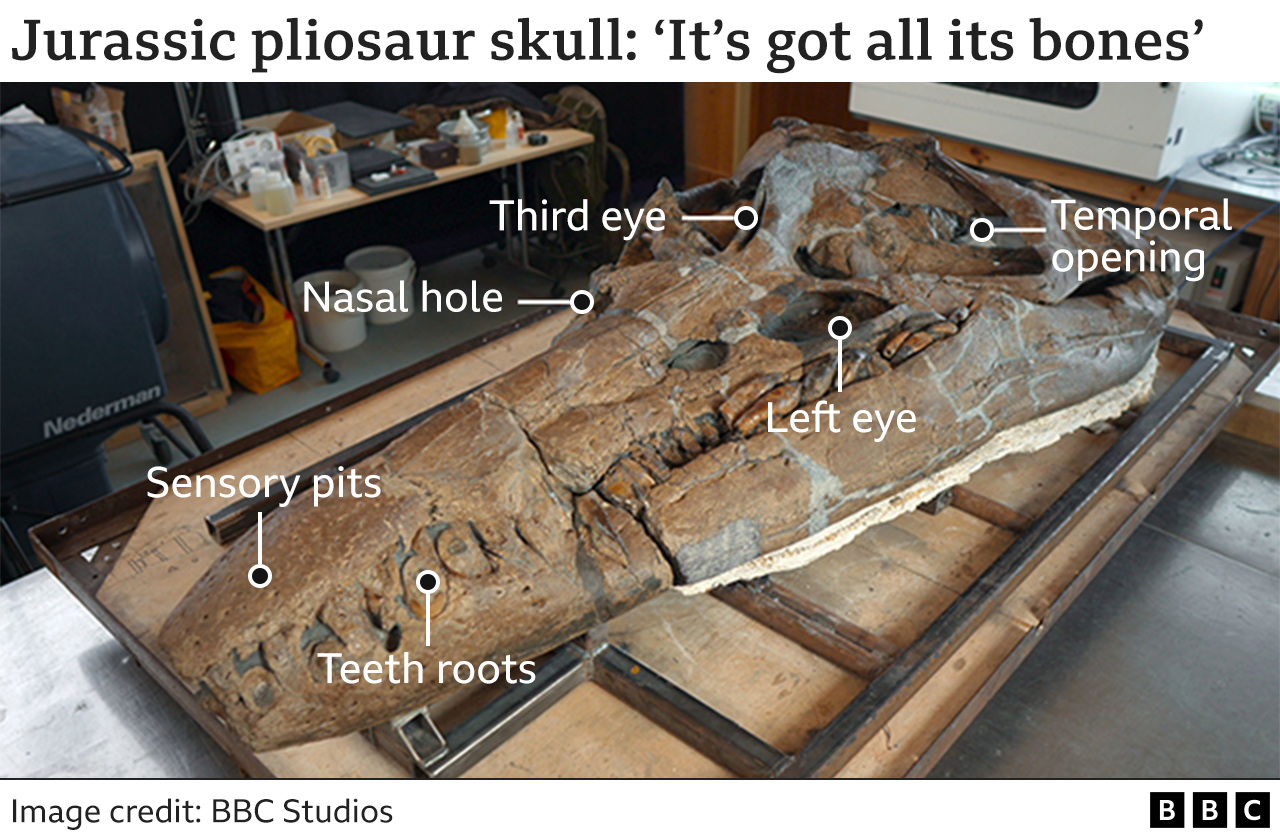
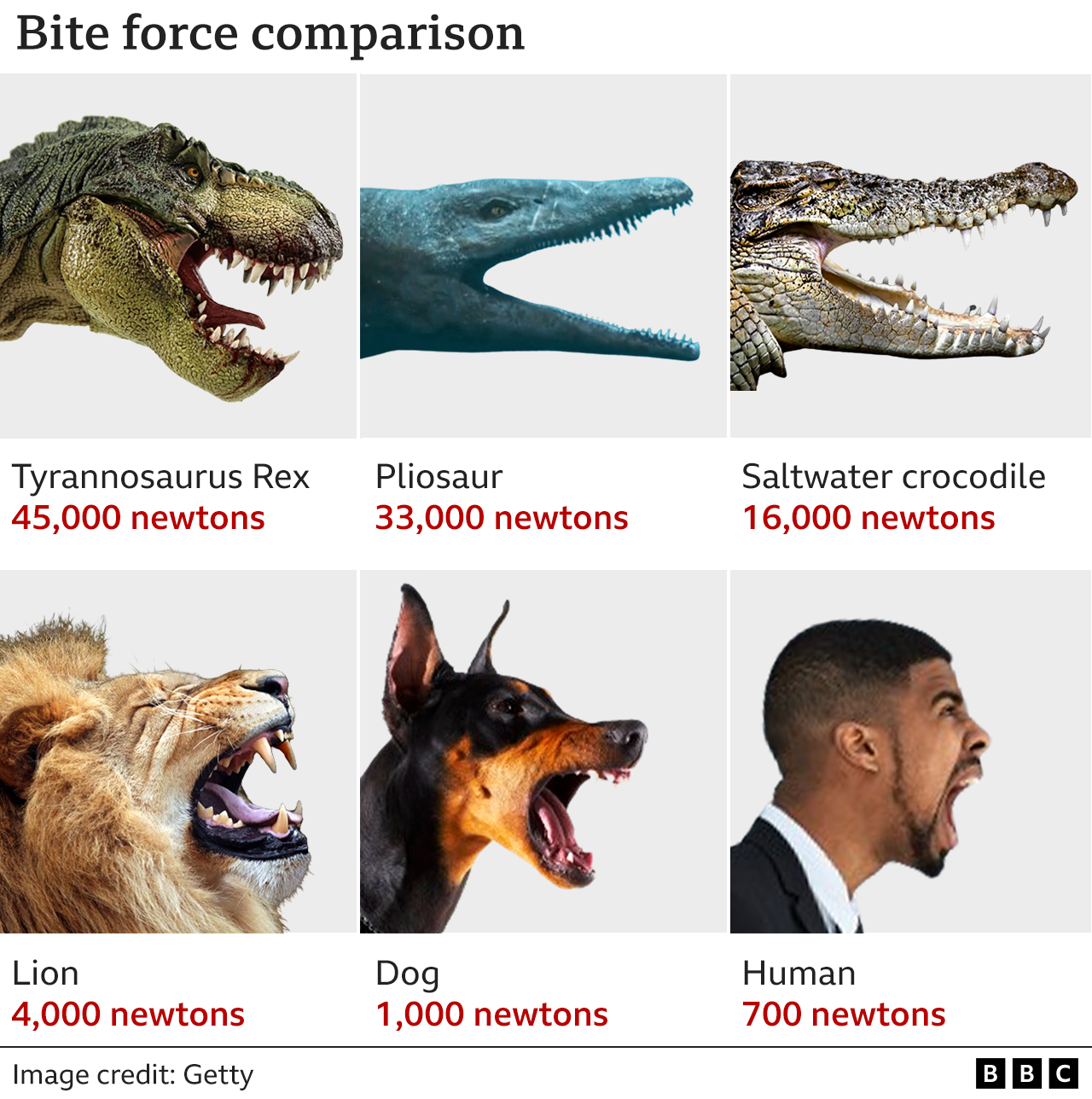
Prof Emily Rayfield, a scientist who studies old animals, looked at the big holes at the back of the pliosaur’s head. These holes tell her about the muscles that worked the pliosaur’s jaws and how strong they were when it snapped its mouth shut and crushed its food.
At the top level, it’s like 33,000 newtons of force. To compare, the strongest jaws in animals today are on saltwater crocodiles, but even they are at 16,000 newtons.
A powerful bite helps catch and stop the prey from escaping. It also lets them crunch through flesh and bone really well.
Crocodiles, for example, close their jaws around something and twist, maybe even twisting a limb off their prey. The pliosaur did something similar, especially with its big head at the back.
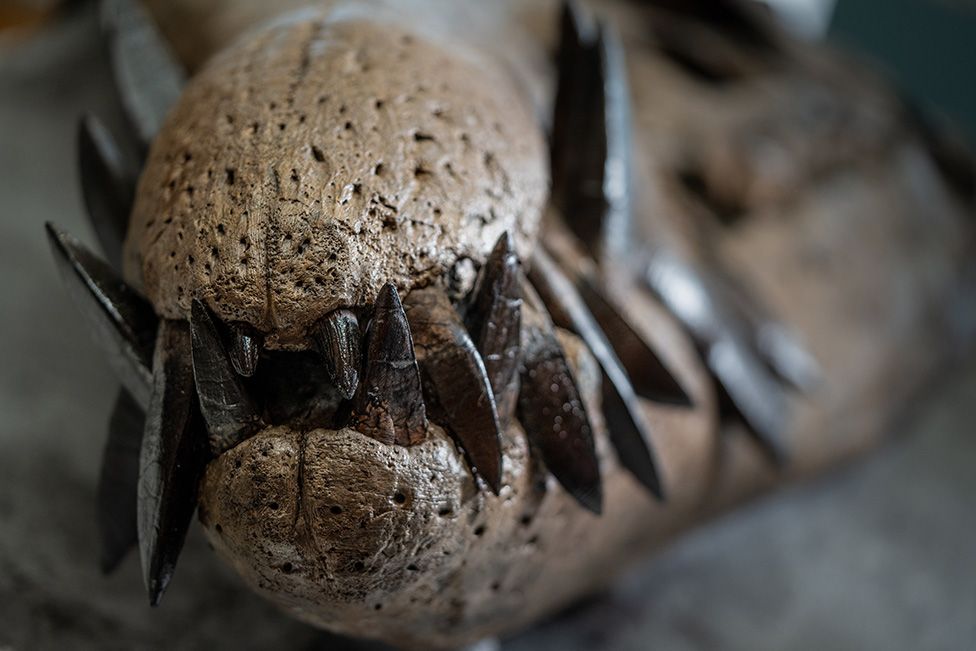
This new discovery has features suggesting it had really sharp and useful senses. Its snout has small pits that might have had glands helping it sense changes in water pressure from possible prey. And on its head is a hole where it might have had a third eye, like some lizards and fish today.
This eye senses light and could have been handy when the pliosaur was coming up from deep, murky waters, helping it spot other animals.
Next year, Steve Etches will show off the skull at his museum in Kimmeridge, called the Etches Collection. There are some vertebrae sticking out at the back of the head, hinting that more of the fossil might still be in the cliff. Steve really wants to finish what he started.
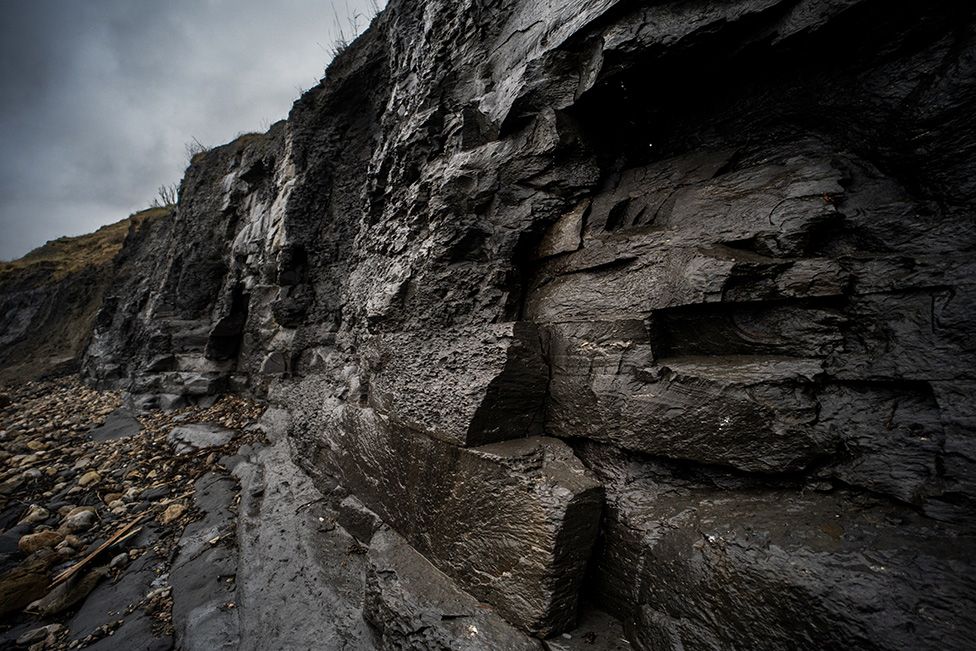
I’m absolutely sure the rest of the animal is there,” he tells BBC News.
And it really should be taken out because the place where it is sitting is getting destroyed quickly. This part of the cliff is crumbling away several feet each year.
It won’t be too long before the rest of the pliosaur falls out and is gone forever. It’s a chance that comes once in a lifetime.
SOURCE :BBC
https://www.bbc.com/news/science-environment-67650247