

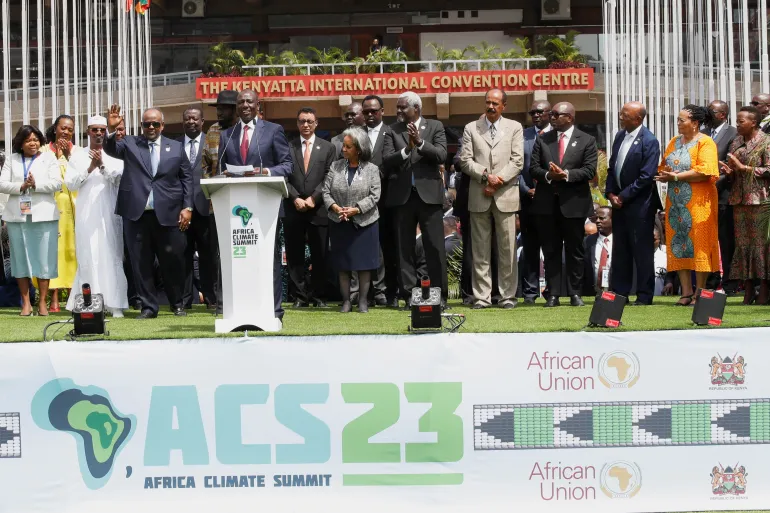
The initial African Climate Summit finished with a request on Wednesday. They want leaders from all over the world to support a worldwide tax on fossil fuels, air travel, and sea transport. They also aim to change the global money system. This way, African countries won’t have to pay extra when they borrow money.
The leaders of Africa, a continent with 1.3 billion people (which is expected to double by 2050), have agreed on a statement. They’re asking the world’s biggest polluters and richest countries to keep their promises about climate change. They’re especially pointing out a promise made 14 years ago to give developing nations $100 billion every year for climate efforts, which hasn’t been fulfilled yet.
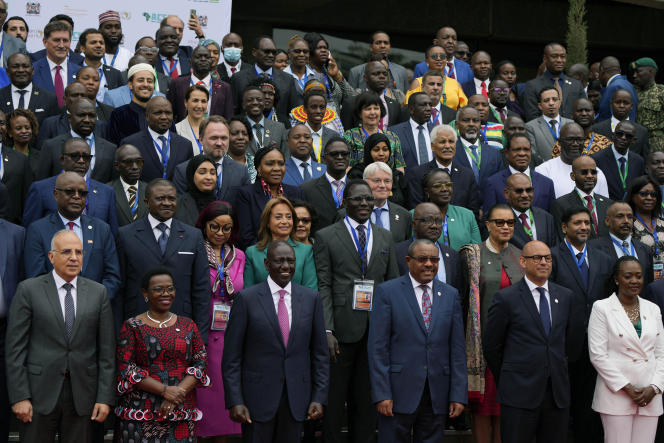
The statement also says that no country should have to pick between growing and taking action for the environment. It was agreed on by everyone at the summit. They also want Africa to use its rich supply of valuable minerals for its own benefit, saying that making the world less dependent on polluting resources is a chance for fairness and shared success.
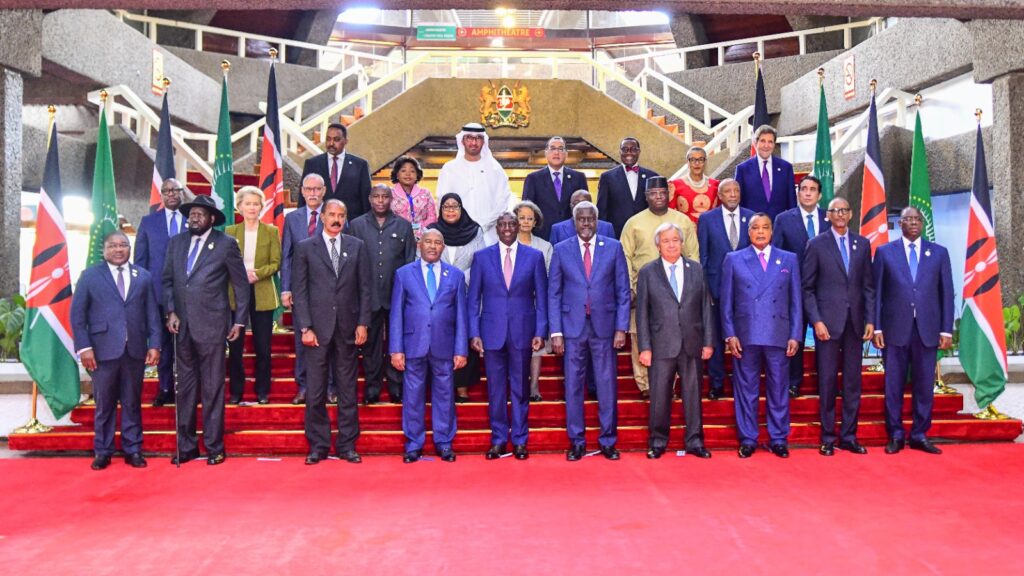
Kenyan President William Ruto, who hosted the summit, mentioned that $23 billion in commitments were made during the event.
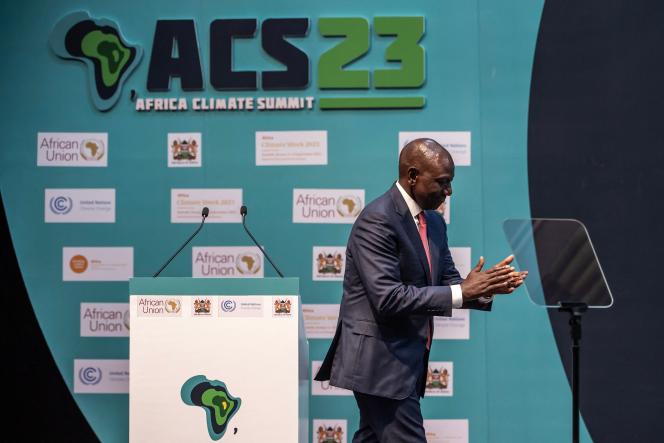
This summit wants to change how people see Africa. They want to show that Africa isn’t just a victim of climate change caused by big economies, but also a place with a lot of solutions, like clean energy resources. However, some in Africa are upset because they think that giving money to Africa in exchange for being allowed to keep polluting elsewhere isn’t fair. They want countries like China, the United States, India, the European Union, and others to reduce their own pollution instead.
One person from Nigeria at the summit called carbon markets (which allow countries to pay for pollution in one place by reducing it somewhere else) “fake solutions”. This reminds everyone that not everyone in Africa agrees with using Africa’s natural spaces to let other places keep polluting.
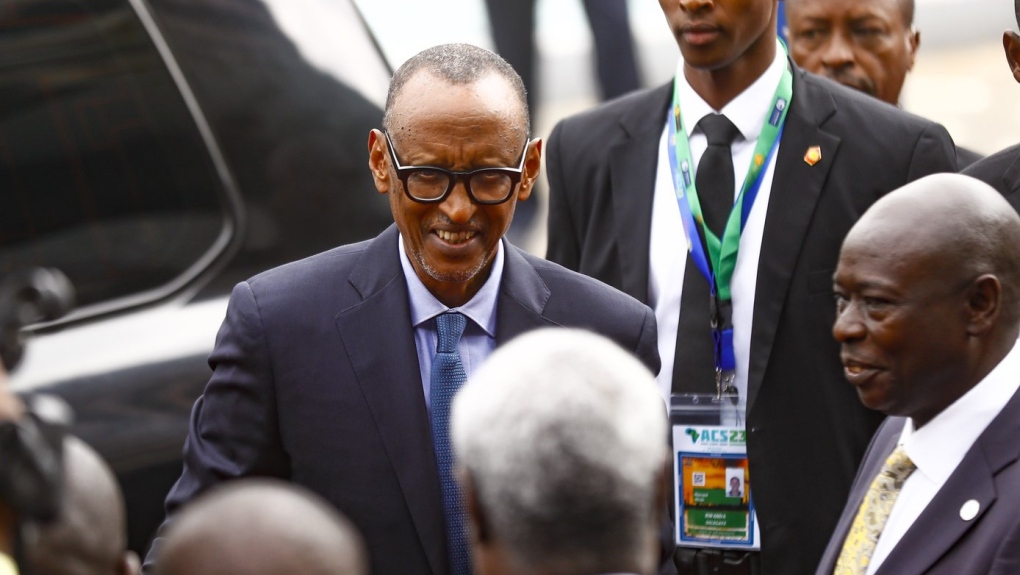
Priscilla Achakpa, who founded the Women Environmental Program, said, “We don’t want solutions forced on our land.” She told the summit that the “Global North” (wealthier countries) should stop thinking in a colonial way.
This summit is part of Africa getting ready for the next big United Nations meeting about climate change, happening in Dubai in December.
The meeting mostly included experienced leaders from government, businesses, and community groups who had been to similar climate events before.
Simon Stiell, who works for the United Nations Framework Convention on Climate Change, mentioned that constantly moving from one event to another doesn’t leave much time for thoughtful discussions. This is important for finding common ground on the best ways to reduce emissions.
In Africa, buying carbon credits (a way to offset emissions by supporting activities like planting trees) is cheaper than in many other places where the rules are stricter. African countries want to get a better price to meet their own goals for reducing emissions.
In Africa’s market, they earn less than $10 for every ton of carbon. In other regions, they can get over $100 for the same amount. In carbon trading, one credit means one ton of carbon dioxide or another similar greenhouse gas has been removed from the air.
The voluntary carbon market, which is still the main one in Africa, has been criticized for lacking honesty and openness. Environmental groups worry that it allows companies to keep polluting without real consequences.
SOURCE:FRANCE24