

Since October 7, there has been a surge in violence between Israel and Hamas. Both sides are accused of doing things that break international rules. People are using words like “genocide,” “war crimes,” and “crimes against humanity” to describe the really bad things happening. Let’s take a look at what these words mean.
It’s been over two weeks since the fighting started between Hamas and Israel, and it’s still really chaotic.
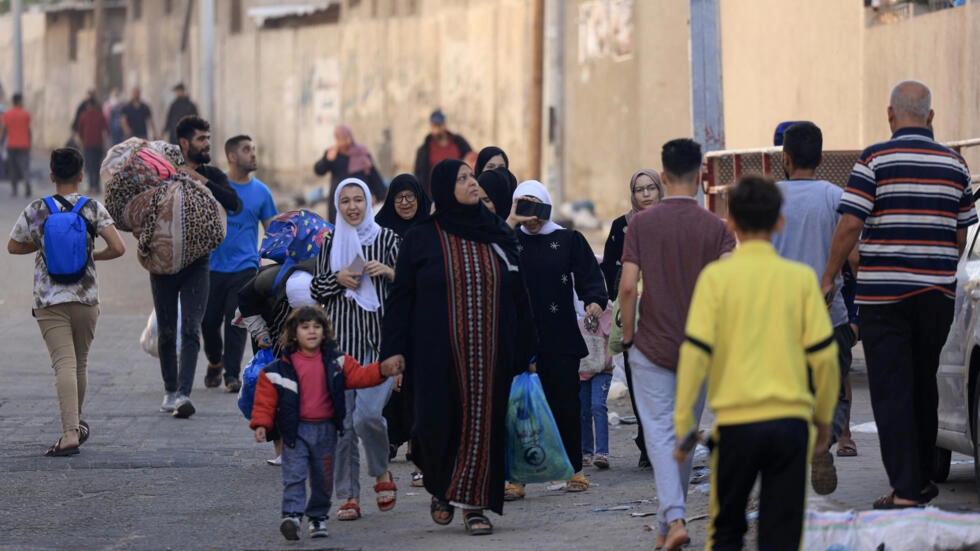
Since October 7, more than 1,400 Israelis and 4,000 Palestinians have died. A lot of people from Gaza have had to leave their homes, and the UN says it’s nearly half of them. Also, over 200 people are being kept against their will by Hamas.
Even with all this violence, leaders from around the world and big groups that watch over global rules keep saying that everyone should follow the rules of war.
On October 10, a group from the UN said they’re gathering proof of bad things happening from all sides. That same day, the US President, Joe Biden, called what Hamas did to Israel an act of “terrorism.” He said it brought back really painful memories and the deep wounds from a very long time ago when Jewish people were hurt and killed.
A few days later, the Palestinian ambassador to the UN, Riyad Mansour, asked the organization to do more to stop Israel from doing something really terrible.
And just recently, on October 18, many people who support Palestine gathered outside the main office of the International Criminal Court (ICC) in the Hague. They wanted the ICC to take action against what they say is the killing of a whole group of people, which they call genocide.
Let’s take a closer look at these words and how they might relate to the very bad things happening between Hamas and Israel lately.
War crimes
According to the UN, a war crime is an illegal action or set of actions that violate international humanitarian law, which is designed to protect civilians.
War crimes are always carried out intentionally and always take place in times of international or non-international armed conflict.
There are different types of war crimes. Some focus on hurting people who need protection, like the injured or regular folks. Others target efforts to help or keep peace, and some go after property. War crimes can also be doing things that are not allowed in war, like purposely killing, hurting badly, torturing, kidnapping, or attacking a whole group of regular people.
Doing a war crime means not following the rules of war, which are written in different agreements like the Geneva Conventions from a long time ago (between 1864 and 1949), the Hague Conventions of 1899 and 1907, and the Rome Statute of 1998.
The Geneva Conventions aim to shield civilians not involved in fighting or those who can’t fight anymore in a conflict. The first convention from 1864 got approval from all major European powers within three years. Red Cross founder Henri Dunant started the international talks. Today, all UN member states have agreed to these conventions.
According to Marco Sassoli, a professor of international law at the University of Geneva, war is always cruel, but if countries follow international humanitarian law, it makes it less harsh.
Regarding the Hamas attack during the Supernova music festival near the Gaza border, Sassoli believes it clearly breaks international law and is a war crime.
He points out that people should not be executed or taken hostage, and only military targets like rocket launchers and command centers can be attacked.
However, prosecuting these crimes is a lengthy process. It involves years of thorough investigations and legal proceedings, often reaching decisions decades after a conflict ends.
For example, in 2012, the former president of Liberia, Charles G. Taylor, was sentenced to 50 years in prison for the terrible acts he committed during the civil war in Sierra Leone in the 1990s.
The International Criminal Court (ICC), established in 2002 through the Rome Statue, is the main authority responsible for holding individuals accountable for war crimes. Some cases are brought before specific tribunals set up by the United Nations.
The methods used to investigate war crimes are the same as those used for any criminal activity: interviewing witnesses, reviewing videos or images, and collecting evidence through analysis, autopsies, or DNA testing.
One challenging aspect is proving the intention of a specific leader, how much they knew, and whether they are directly responsible for what occurred.
Johann Soufi, an international lawyer and former legal office chief at the UN agency for Palestinian refugees (UNRWA) who lived in Gaza for three years, highlights that international justice is slow, but it’s exceptionally patient.
Crimes against humanity
Crimes against humanity are different from war crimes. They don’t have to happen during a war, and they don’t require a specific intent. There isn’t a specific treaty like the Geneva Conventions for them yet, but the UN is working on it.
Still, they’re seen as very serious breaches of global criminal law, according to the ICC. These crimes involve acts like apartheid, enslavement, or forcefully moving a population. They happen as part of a widespread and organized attack on regular people.
These acts are defined by their large scale, either in terms of the number of people affected or the area it covers, and how carefully they’re carried out. They usually involve plans or at least approval from state authorities.
If the act happens randomly, accidentally, or in isolation, it’s not seen as a crime against humanity.
In response to Hamas attacks, Israel’s military has been destroying entire city areas in Gaza and getting ready for a ground invasion. They’ve told people in northern Gaza to move to the south, but Sassoli thinks this goes against humanitarian law.
The term “crimes against humanity” has been used since the late 18th century, linked to issues like the slave trade and European colonialism.
These crimes have evolved over time in international law and in courts like the ICC. Many countries have also included them in their own laws.
Like war crimes, the ICC usually handles cases of crimes against humanity. But in some cases, individuals can be tried in certain countries based on universal jurisdiction.
Getting justice for victims of these crimes is tough. Marco Sassoli points out that war crimes and crimes against humanity are done by individuals, not states or groups. So, finding the specific person responsible is much harder.
However, it’s not impossible. In a major case in a special UN tribunal for the former Yugoslavia, Dusko Tadic, a former paramilitary involved in an attack during the Bosnian War, was convicted. This was the first trial for sexual violence against men, and Tadic got a 20-year prison sentence.
Genocide
The term “genocide” was created in 1943 by a Polish lawyer named Raphael Lemkin. He saw the terrible killings done by the Nazis during the Holocaust and spent his life trying to make the word an official international crime. It comes from the Greek word “genos,” meaning race or family, and the Latin word “cide,” which means killing.
Genocide was first acknowledged as a crime under worldwide law in 1946 by the UN and later made official in the Genocide Convention of 1948. Like crimes against humanity, it can happen through various acts, like killing, causing serious physical or mental harm, and forcibly moving children.
But for those acts to be called genocide, they must be done “with intent to destroy, in whole or in part, a national, ethnic, racial, or religious group.” The terrible things that happened during the Holocaust are considered a genocide against the Jewish people. The horrifying events in Rwanda and Armenia are also seen as genocides.
Genocide can happen during a war or when there’s no war, though it’s rarer in times of peace. The hardest part to prove in this crime is the intention behind it, and that’s what sets genocide apart and makes it very challenging to prosecute.
While people worldwide supporting Palestine often say “stop the genocide”, Sassoli is very cautious about using this term for Israel’s attacks on Gaza. He thinks it’s a very serious word that shouldn’t be used lightly.
Right now, the International Criminal Court (ICC) is looking into possible crimes in the Palestinian territories under occupation. Israel strongly disagrees with this decision. Even though Israel isn’t part of the court, the Palestinian territories and Palestinians are.
“In a perfect world, we wouldn’t need humanitarian law because it only applies during wars,” the professor says. “And in a world where rules are followed, there wouldn’t be any wars.”
SOURCE:FRANCE24