


Grandma Cuh, who is 105 years old, has lived on the Indonesian island of Rempang her whole life.
The oldest resident of this fishing village, she has married twice, given birth to eight children, and buried four of them. When her time comes, she says, she wants to be laid to rest alongside her parents and late husbands.
“I want my children to have this land when I pass,” she says, but worries that will not happen.
The fate of the island, home to some 7,500 people, has become the subject of a fierce debate after the government hastened plans to turn it into an economic hub. Islanders, who were told they would be relocated to live elsewhere, protested and clashes ensued between locals and authorities in September. The strength of the opposition forced some compromises from the government. But Rempang remains divided.
The road to an “eco-city”
In 2004, Jakarta tried to change Rempang, but people didn’t agree with making a big casino area. Later, after the President talked with China, they decided to make Rempang Eco-City. It will use a big part of the island, but some will stay as a protected forest. They said it’s a very important project, so they have special powers to move people out, even if they’ve lived there a long time. The new city will make jobs and bring in tourists. A Chinese company will also build a huge factory there. This means everyone who lives in Rempang has to leave, but many of them have been there for a very long time. They belong to groups that have lived there for hundreds of years, but they don’t have official papers to show they can stay.
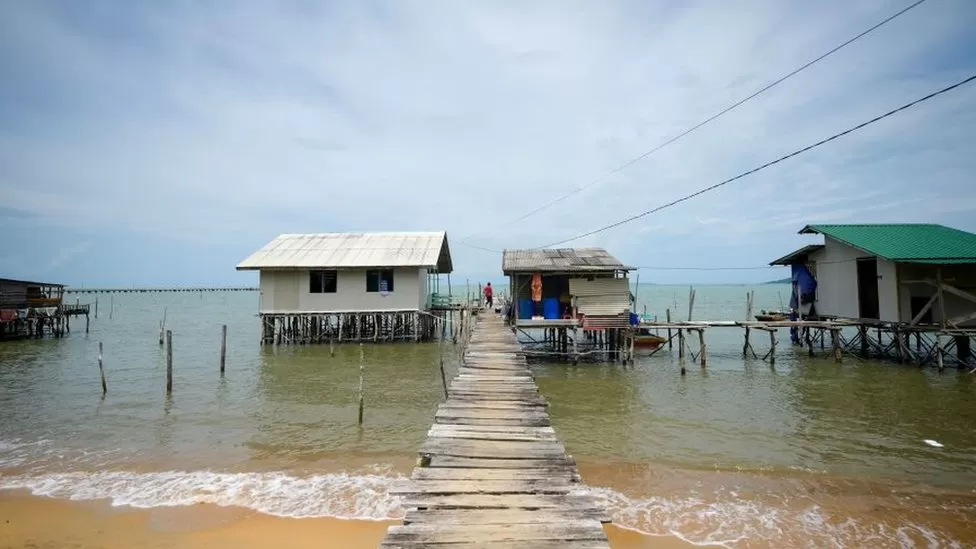
Angry locals said they had never been involved in the decision-making and only learnt of the plans in the news.
“We should not allow the information gap to persist as it has in the past,” said Mayor Muhammad Rudi – who administers Rempang and the neighbouring island of Batam. “Moving forward, we aim to come together, establish good relations, and reach a common understanding.”
He did not say whether villagers were informed of evictions plans beforehand.
Residents also complained of intimidation. Legal aid workers who are advising them told the BBC that residents had alleged that they had “received letters from the police accusing them of breaking the law”. Police denied this, but said “individual police officers” may have done so.
Tension spilled over in September when hundreds took to the streets and clashed with security forces, who responded with tear gas and water cannons. More than 40 people were arrested.
One of the protesters, 34-year-old Ardiansyah has been in custody since mid-September and is facing up to five years in prison.
“People say we have to stand up together to preserve Rempang,” says his sister, Juliana, Ardiansyah, trying to hold back her tears. “[But] When I heard that he was arrested, my mind went blank. I can’t eat. My heart hurts.”
Ardiansyah and his girlfriend were meant to marry soon. That future now looks uncertain.
The National Human Rights Commission said its preliminary investigation had found that officials may have violated rights in pursuing evictions as well as their response to the protests. Following widespread criticism over the police response to the protests and subsequent violence, President Jokowi scrapped the eviction deadline, which had been set for the end of September. The government said residents did not have to leave the island but will be moved elsewhere on the island “in a peaceful way”.
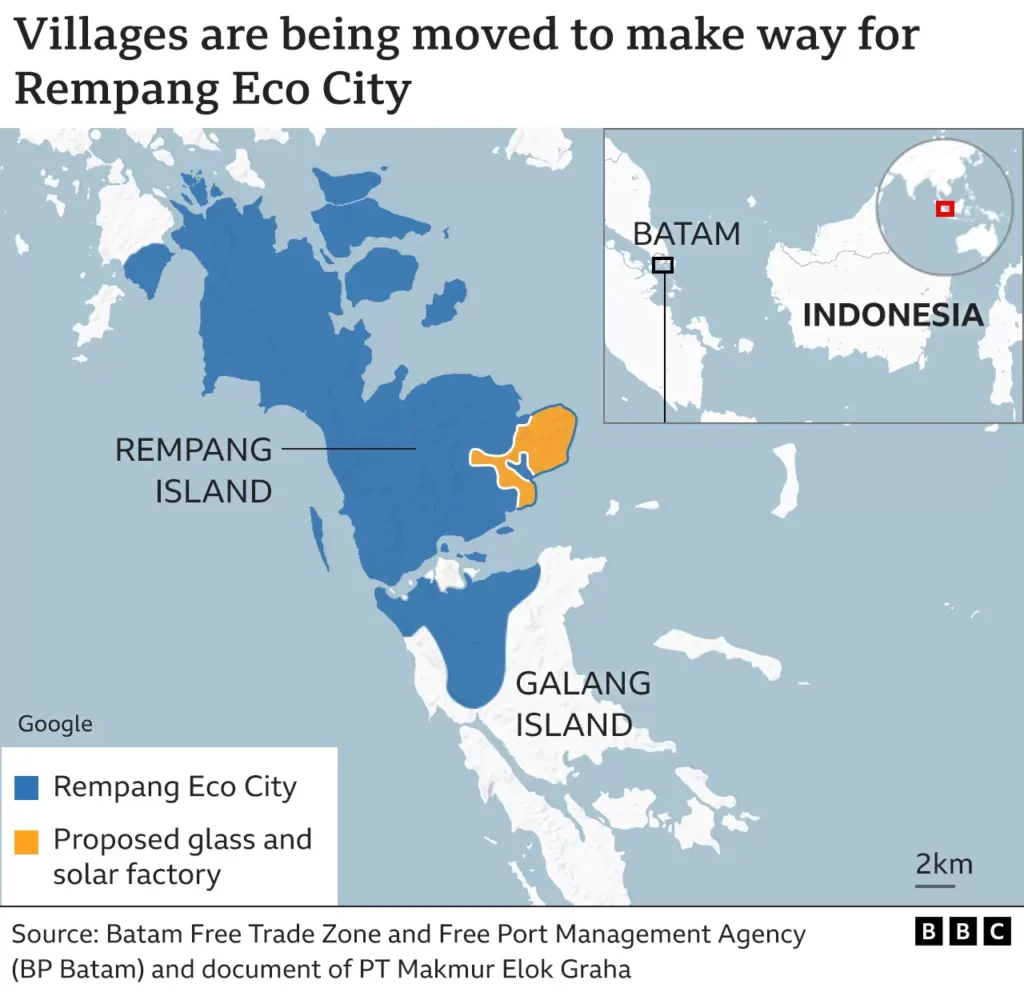
The mayor, Mr. Rudi, thinks this will finally solve the problem. He says the new place in Rempang will have schools, hospitals, and places for about 2,000 families’ fishing boats. But it will take about two years for everything to be ready. In the meantime, the people from Rempang will get some money every month and a place to stay in Batam.
A community divided
“They want to move us to small houses in the city – I don’t want to [go],” Grandma Cuh says.
But a handful have decided to accept the government’s offer and leave. The proposed relocation has divided the close-knit community. “My neighbours said, ‘How can I have the heart to leave?'” says 25-year-old Angga Pratama who moved out after accepting Mr Rudi’s offer. He believes there is no stopping the government’s plan. “My leaving does not affect [the others’] fight to keep the island. But now they view me as a traitor.”
Although the majority are reluctant to leave They say the intimidation continues as officials knock on doors, asking why so many don’t want to sign the relocation documents.
“They do that every day. We can’t go on with our lives peacefully,” says Nurita, a great-grandchild of Grandma Cuh.
She now spends much of her time at a booth hosted by legal aid workers, discussing with other locals how to fight the eviction.
Nurita says they have one goal: “We will stay in our villages. The government may destroy our houses but we will not leave. We will stay here until we die.
SOURCE:BBC