

Many people care about how much they weigh. It helps doctors make decisions and interests individuals. But for those in wheelchairs, finding a scale can be really hard. This can be a problem.
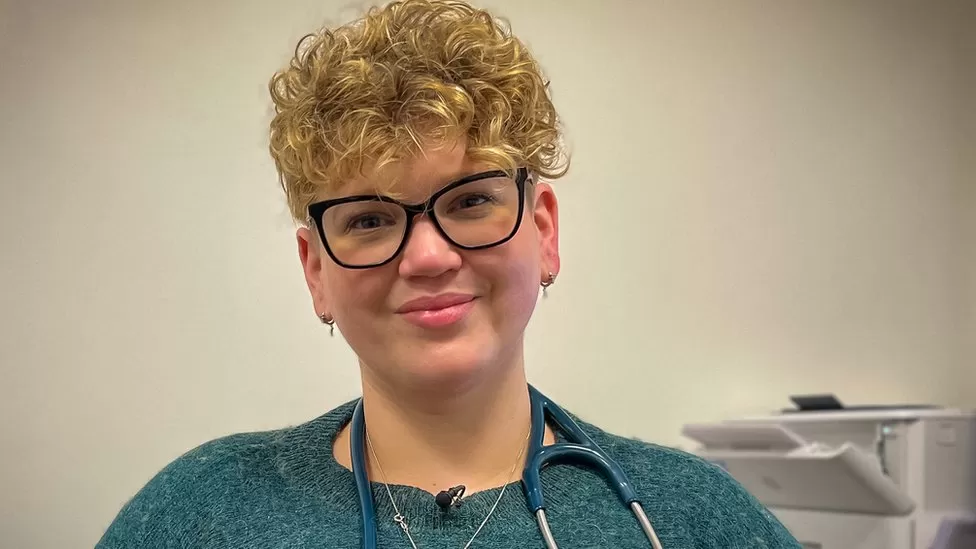
Lizzie hasn’t been weighed for about 22 years, since she was around 15 years old. Now she’s 37 and has had three successful pregnancies, but she didn’t know how her body was changing or how her babies were growing. Lizzie lives in Devon and uses a wheelchair because of her muscle condition. Weighing herself on regular scales is hard because they need you to stand still on a small platform. She’s tried, but it’s tricky. She has to sit down fast, lift her feet up like in a yoga pose, and try to balance. As expected, the weight reading is always wrong.
There are special scales designed to help people like Lizzie who use wheelchairs. These scales let you sit down while they measure your weight. There are also scales for beds and hoists. Some scales are big and let you roll your wheelchair onto them, but you have to subtract the weight of the chair afterward.
However, it seems like these special scales aren’t easy to find. Even a big mobility aid store in the UK, Ability Superstore, which has served a lot of customers, has never been asked for these scales. They think it’s because the special ones are more expensive, often costing hundreds of pounds. Regular scales, on the other hand, can be bought for as little as £9.99.
So, many disabled people don’t have access to these scales that most people use without thinking. Dr. Georgie Budd, who uses a wheelchair herself, is worried about this. She knows how hard it can be for people to get to scales.
Weight is important for a lot of health reasons, like giving the right amount of medicine. It’s also important for general health and especially during pregnancy. If someone using a wheelchair loses weight, it can be concerning for a doctor.
Although some people can tell if they’re gaining or losing weight by how their clothes fit, it’s not always accurate. This is especially true because clothes are usually made without thinking about wheelchair users.
Dr. Georgie thinks managing weight is really important, especially for wheelchair users. When you’re in a wheelchair, you’re not using your big leg muscles as much, so you don’t burn as many calories. And it’s often harder to exercise.
One more important thing lost because of the difficulty in weighing is motivation. Gillian Morphy knows this well. She had her right leg removed a year ago because of a condition called dystonia, which makes her muscles move in uncontrollable and sometimes painful ways. She’s trying to lose weight, but the last time she was weighed was six months ago at her local clinic for amputees.
At every medical appointment, she’s told she needs to lose weight, but she’s not getting much help on how to do it. Losing weight has become even more important since her amputation. She doesn’t want to put too much weight on her remaining leg because she doesn’t want to cause any problems there. She wishes she could be weighed weekly to know if she’s making progress.
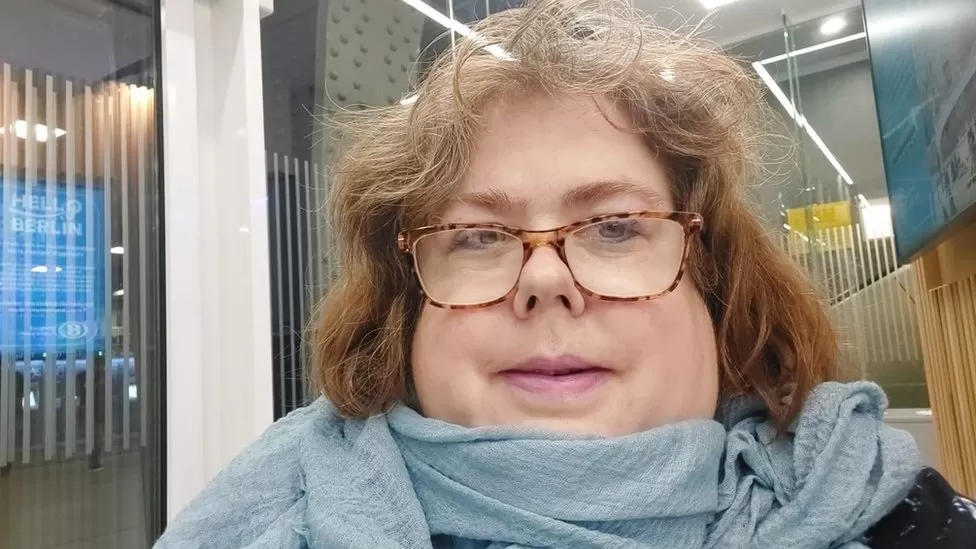
Gillian can get weighed at the amputee clinic, but it’s not easy for her to just go there whenever she wants. She relies on patient transport, which can mean waiting around for a long time. She says, “For two minutes on the scales, that could take me six hours.”
In general, there isn’t much information available on how people like Gillian and Lizzie, along with their medical teams, can measure weight and find accessible scales.
Neither NHS England nor the government give doctors advice on what equipment to use, and they don’t keep track of how many hospitals have this kind of equipment or where they’re located.
The National Institute for Health and Care Excellence (NICE) looked at this issue in 2014 and asked for more research to be done. But so far, nothing has started.
Lizzie’s healthcare trust – Devon Integrated Care Board, which takes care of Devon, Torbay, and Plymouth – says they do have equipment that can measure weight “safely and with dignity.” But Lizzie hasn’t been offered the chance to use it yet.
Gillian wonders if there could be simpler solutions, like doctor’s offices teaming up to buy accessible scales for the local area.
Her next appointment at the amputee clinic is coming up soon, and she’s actually looking forward to getting on the scales and seeing how much progress she’s made with losing weight.
“After that, I won’t get weighed again until Christmas, and then it could be another six months.
CREDIT:BBC