

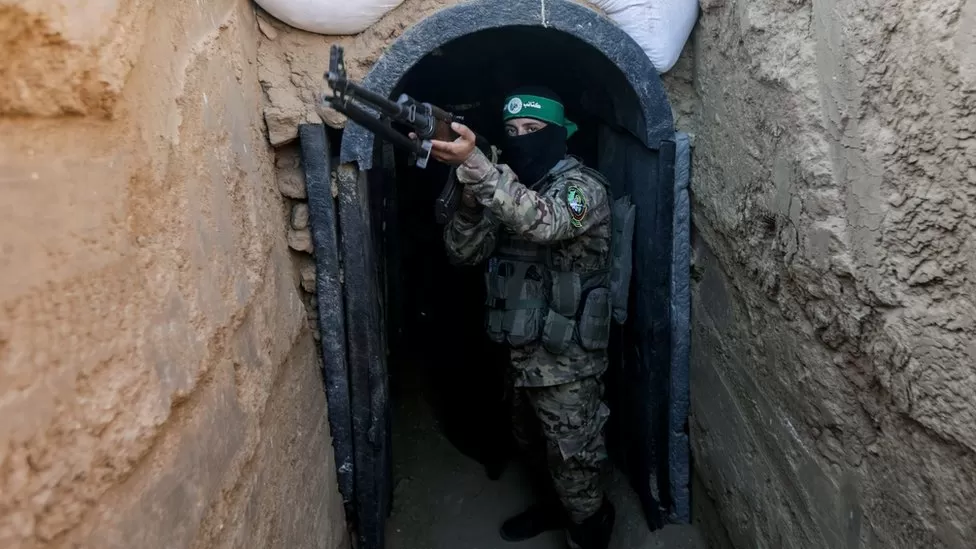
Israel is attacking hidden tunnels under Gaza that were built by Hamas. They are doing this in response to an unusual attack by Hamas across the border on Saturday.
“Think of the Gaza Strip as one layer for civilians and then another layer for Hamas. We are trying to get to that second layer that Hamas has built,” an Israel Defense Forces (IDF) spokesperson said in a video on Thursday.
“These aren’t bunkers for Gazan civilians. It’s only for Hamas and other terrorists so that they can continue to fire rockets at Israel, to plan operations, to launch terrorists into Israel,” they claimed.
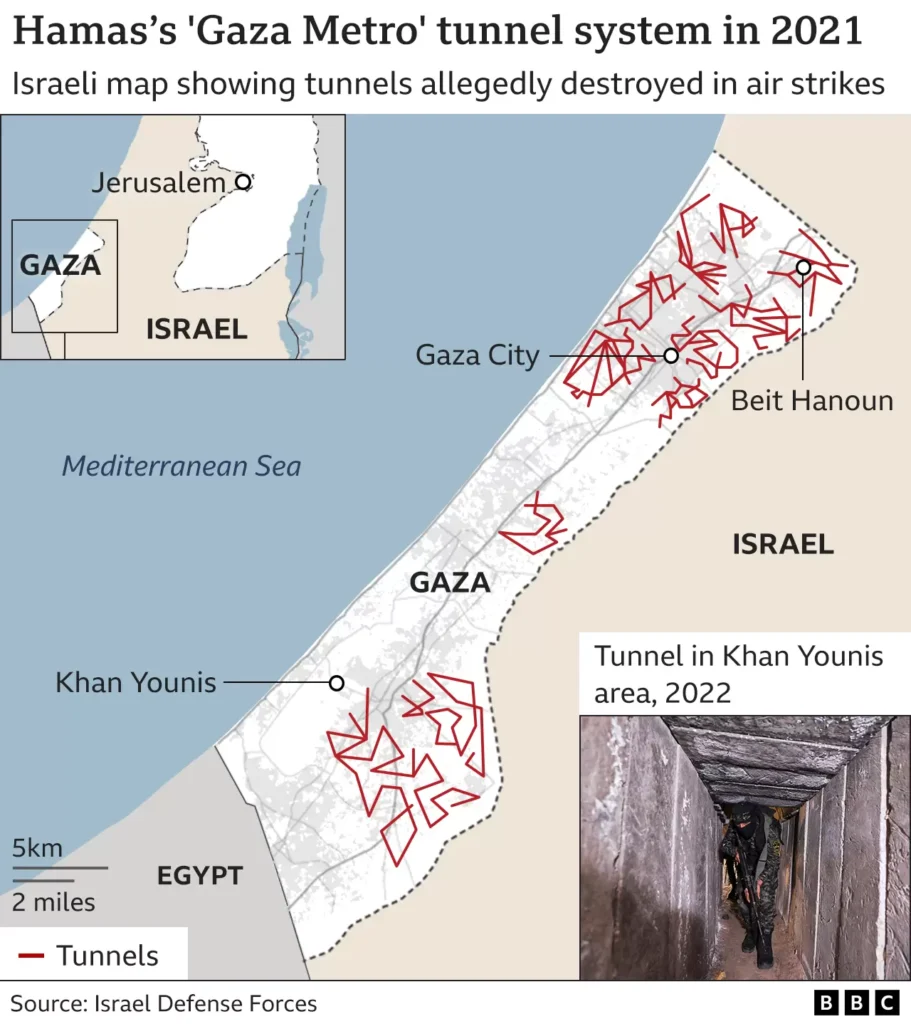
It is very difficult to assess the size of the network, which Israel has dubbed the “Gaza Metro” because it is believed to stretch beneath a territory that is only 41km (25 miles) long and 10km wide.
Following a conflict in 2021, the IDF said it had destroyed more than 100km of tunnels in air strikes. Hamas meanwhile claimed that its tunnels stretched 500km and that only 5% were hit. To put those figures into perspective, the London Underground is 400km long and is mostly above ground.
Tunnel construction began in Gaza before Israel withdrew its troops and settlers in 2005.
But it was ramped up after Hamas took control of the Strip two years later, which prompted Israel and Egypt to begin restricting the movement of goods and people in and out for security reasons.
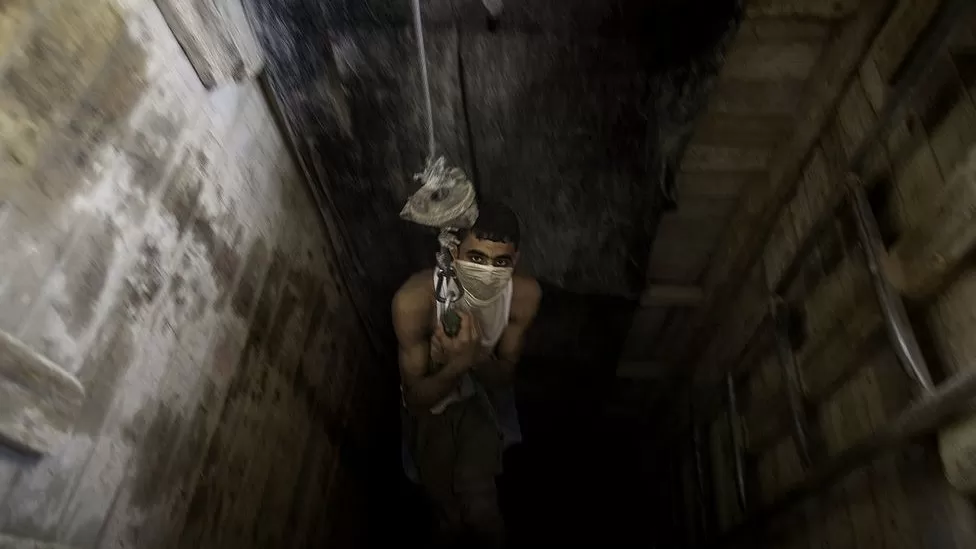
At its peak, almost 2,500 tunnels running underneath the Egyptian border were used to smuggle in commercial goods, fuel and weapons by Hamas and other militant groups.
The smuggling became less important to Gaza after 2010, when Israel began allowing more goods to be imported through its crossings. Egypt later shut the smuggling down by flooding or destroying the tunnels.
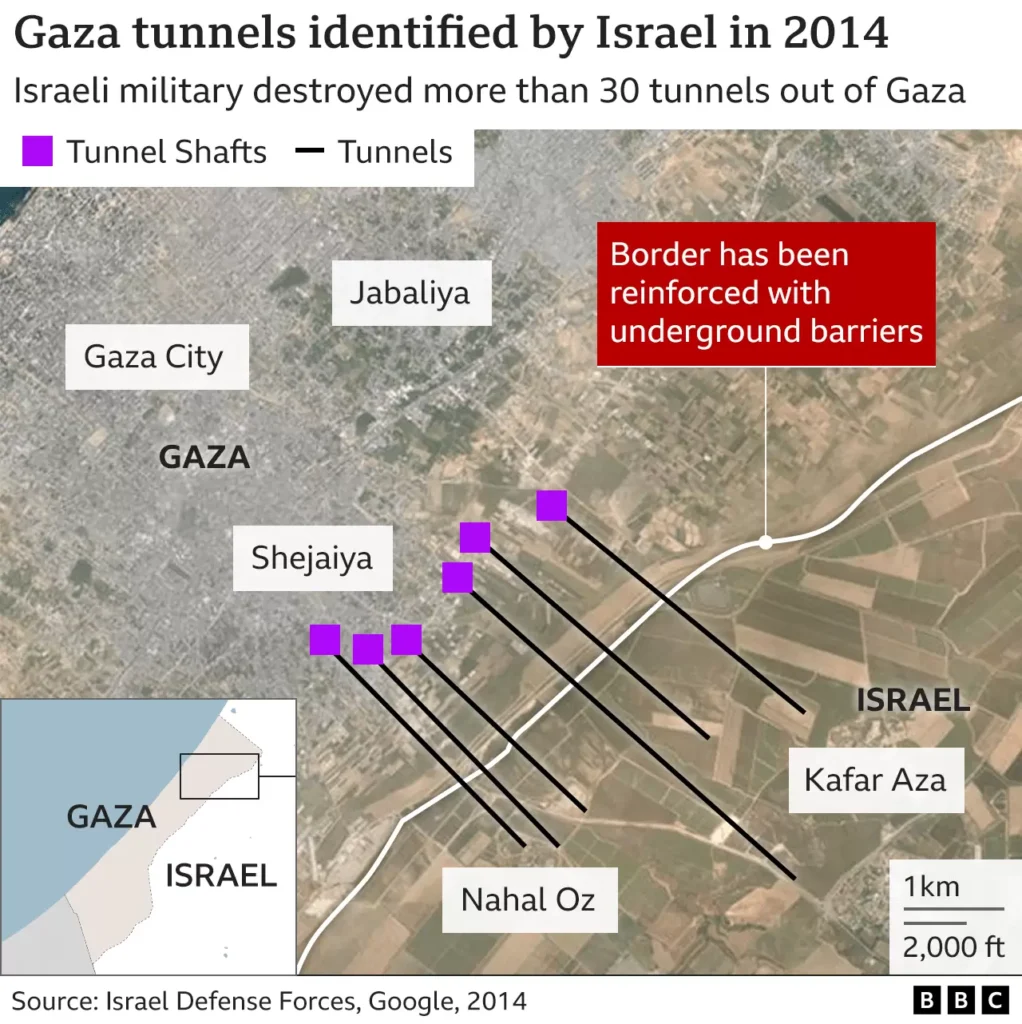
Hamas and other groups started digging tunnels to attack Israeli soldiers. In 2006, they used one to kill two soldiers and capture Gilad Shalit, who they held captive for five years. In 2013, the IDF found a tunnel leading from Gaza to an Israeli area. The next year, Israel launched a big attack to stop these tunnels. The IDF destroyed over 30 tunnels, but militants still used one to attack and kill four Israeli soldiers.
The cross-border tunnels tend to be rudimentary, meaning they have barely any fortification. They are dug for a one-time purpose – invading Israeli territory,” says Dr Daphné Richemond-Barak, an expert on underground warfare who teaches at Reichman University in Israel.
“The tunnels inside Gaza are different because Hamas is using them on a regular basis. They are probably more comfortable to be in for longer periods of time. They are definitely equipped for a longer, sustained presence.”
“The leaders are hiding there, they have command-and-control centres, they use them for transport and lines of communication. They are equipped with electricity, lighting and rail tracks. You can move around more and stand.”
She says Hamas appears to have “perfected the art” of tunnel building and warfare in recent years, having learned a huge amount by observing the tactics of Syrian rebel fighters in Aleppo and jihadist militants from the Islamic State (IS) group in Mosul.
The tunnels inside Gaza are believed to be as much as 30m (100ft) below the surface and have entrances located on the bottom floors of houses, mosques, schools and other public buildings to allow militants to evade detection.
Building the network has also come at a cost to the local population. The IDF has accused Hamas of diverting millions of dollars given to Gaza in aid to pay for the tunnels as well as tens of thousands of tons of cement intended for rebuilding homes destroyed in previous wars.
It is possible that a cross-border tunnel was used by Hamas militants during last weekend’s attacks in Israel, in which at least 1,300 people were killed, most of them civilians, and more than 150 others were taken as hostages. There were reports that a tunnel exit was discovered near the kibbutz of Kfar Aza, where dozens of civilians were massacred.
If that is confirmed, the tunnel would have been built beneath the underground concrete barrier studded with sophisticated anti-tunnel detection sensors which Israel finished installing at the end of 2021.
Dr Richemond-Barak says it would be a shock, but stresses that no tunnel detection system is fool-proof. “This is why tunnels have been used for time immemorial in war, because is there no way to prevent them.”
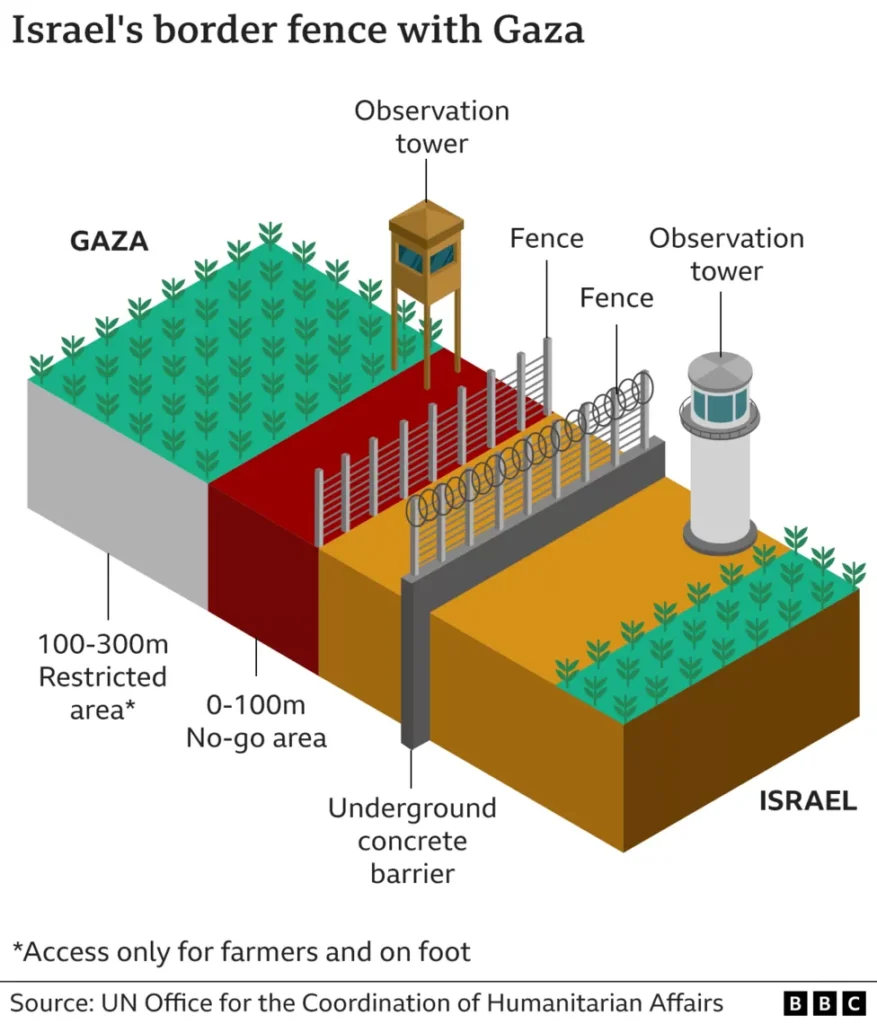
She says it’s not realistic for Israel to expect the military to destroy all of Hamas’s tunnels in Gaza. This is because there are parts of the network where civilians won’t or can’t leave. Some of the tunnels are also unknown, and destroying them could cause too much harm.
Getting rid of the tunnels will also result in a significant loss of life, including Israeli soldiers, Palestinian civilians, and any hostages, she warns. Since Saturday, over 1,500 people in Gaza, many of them not involved in fighting, have already died due to Israeli air strikes.
Hamas is skilled at using innocent people as shields. When they know a strike is coming, they’ll put civilians on top of buildings. This has made Israel cancel strikes many times, according to Dr. Richemond-Barak.
In the 2021 conflict, strong air strikes in Gaza City caused three residential buildings to collapse, killing 42 people. The IDF said they were aiming at underground tunnels, but when they collapsed, they took the building down with them.
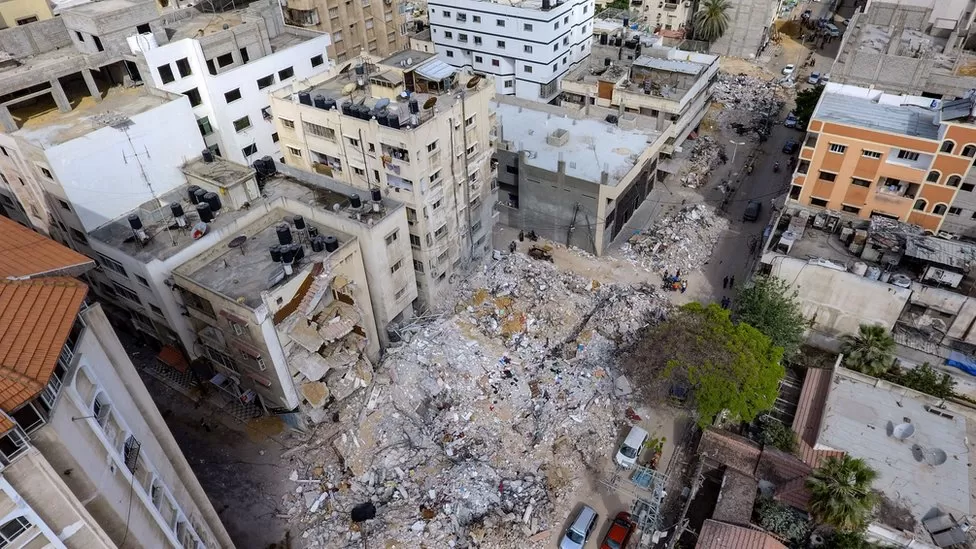
The tunnels that Hamas has built will make it harder for the Israeli army, even though they have advanced technology and information. Dr. Richemond-Barak says the tunnels could be filled with dangers. For example, Hamas might set traps inside them, or even capture Israeli soldiers. This would make it very difficult to rescue anyone who gets hurt.
She also points out that just trying to find and secure these hidden tunnels is much harder than securing an open area. It’s like trying to protect something you can’t see.
However, there are some things the Israeli army can do to reduce the risks. They might use flying robots and vehicles without people inside to explore the tunnels first, to check for traps. They could also drop special bombs that go deep underground before exploding. But this could be risky in crowded city areas because it might cause damage to nearby buildings.
CREDIT:BBC