

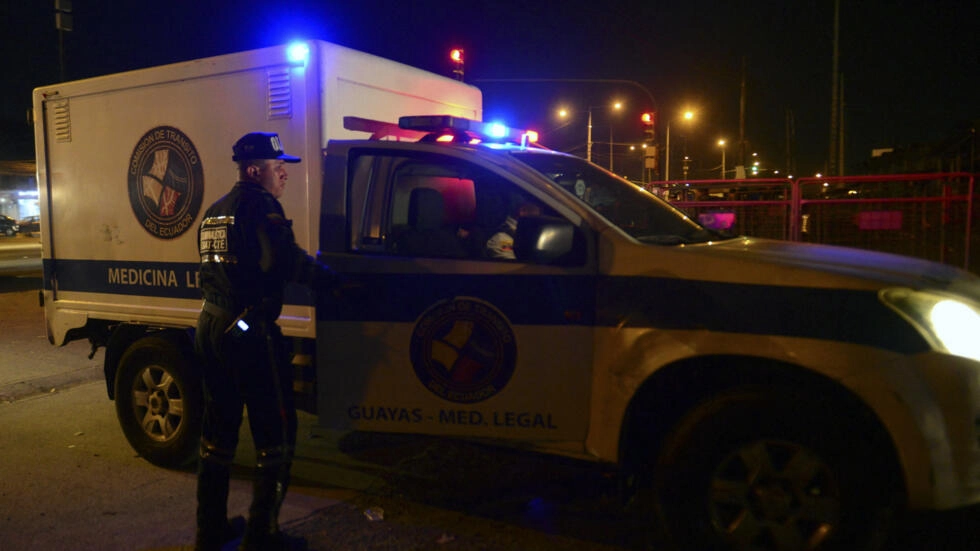
Six suspects in the August assassination of Ecuador presidential candidate and anti-corruption crusader Fernando Villavicencio were killed in prison on Friday, officials said.
The prison authority in Ecuador first said there was an “incident” in Guayas 1 prison in Guayaquil, which resulted in six people dying. They later explained that those who died were from Colombia and were accused of killing former presidential candidate Fernando Villavicencio. Villavicencio, a 59-year-old journalist, was shot as he left a campaign event in Quito before the first round of voting. When President Guillermo Lasso heard about the deaths, he said he would come back from his trip abroad right away to deal with the situation.
Lasso went to New York on Thursday for personal reasons and was supposed to go to Seoul on Saturday for important trade discussions.
He said on X, which used to be called Twitter, “I’ll come back to Ecuador soon to deal with this urgent situation. We won’t hide the truth, and there won’t be any hiding or helping. The real story will come out.”
The prosecutor’s office, along with the police and military, said they were following safety procedures due to the disturbance on Friday afternoon.
They also mentioned on X that soon, specialized military personnel will go into Cellblock 7, where the trouble started, to take control of the situation.
Guayas 1 is one of five prisons in a big complex in Guayaquil, an important port city. It’s been a center of a violent battle between rival gangs involved in drug trafficking.
At the end of July, a riot in Guayas 1 resulted in over 30 deaths.
Key election issue
The killing of Villavicencio, who was the second most popular candidate, shocked Ecuador right before the national elections. The main issues were corruption and the country’s worsening security situation.
Six Colombians with extensive criminal histories were taken into custody shortly after, while a seventh was killed at the crime scene.
Villavicencio conducted many investigations, including uncovering a large corruption network that resulted in former president Rafael Correa being given an eight-year prison sentence.
Correa left the country to avoid going to jail and has been living in Belgium for six years.
Villavicencio angered gangs and drug traffickers for openly opposing the cartels, many of which operate from prisons in Ecuador.
Since 2021, over 430 inmates have died violently, with dozens being brutally killed and burned in conflicts between rival gangs.
In late August, several prisons across the country saw guards being taken hostage, though they were eventually released.
Between 2018 and 2022, homicides on Ecuador’s streets increased fourfold, reaching a record of 26 per 100,000 people.
Experts suggest this rate might rise to as high as 40 this year.
Due to anti-drug efforts in other South American countries, drug cartels moved to Ecuador, taking advantage of its large Pacific ports, loose controls, widespread corruption, and use of the U.S. dollar as currency.
The prison crisis has become a major topic of discussion ahead of the second round election on October 15, featuring leftist lawyer Luisa Gonzalez and 35-year-old newcomer Daniel Noboa.
Noboa has suggested using ships to detain the country’s most dangerous prisoners offshore.
SOURCE:FRANCE24