

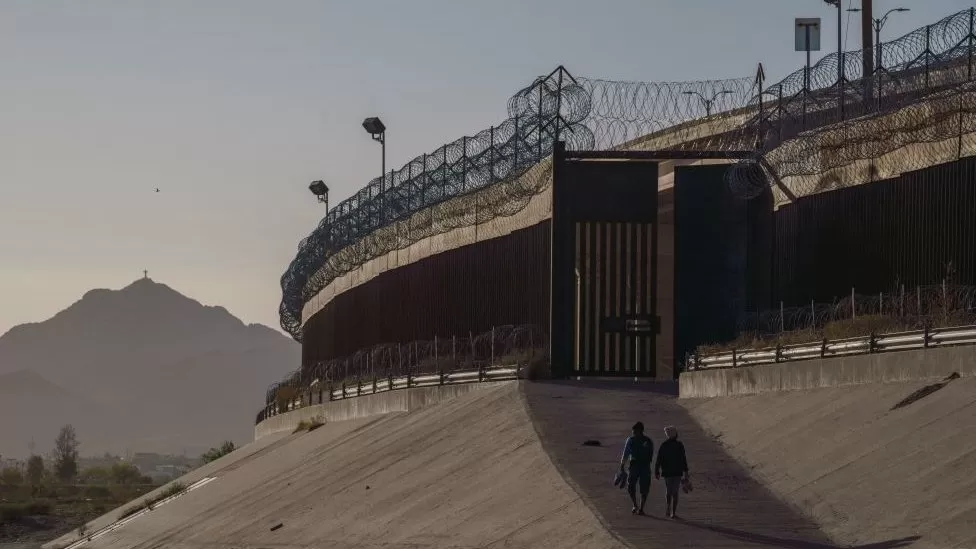
At first glance, Starr County in Texas is a quiet place.
The area near the US-Mexico border has quiet towns with small hills and streams. You can often hear sounds from Mexico. This place has been a busy spot for people crossing the border for a long time. Now, there’s a big talk about making the border more secure.
President Biden said they will build about 20 miles of new wall, even though he previously said he wouldn’t build more. This has caused a lot of discussion, because building walls on the border was a big thing when Trump was president.
Before, Trump said to fix and make stronger almost 460 miles of wall, but only about 50 miles were completely new. Since he left, Trump and some other Republican leaders want more walls because there are more people trying to come in from the south.
People argue about whether walls really help. The government’s data says in some places, new walls reduced illegal entry by a lot. But other studies say it didn’t make a big difference. One study said walls reduced migration by 35%, but it also said using the money to hire more border agents might work just as well.
President Biden and his team keep saying they don’t think walls are the best way to solve the border issue.
Doris Meissner, a former leader in immigration services, explained to the BBC that these barriers can work by guiding migrants to areas that are easier to patrol. She said, “Having a barrier in Starr County means Border Patrol can focus on where people are crossing, instead of covering vast distances.”
The word “wall” isn’t entirely accurate. Customs and Border Patrol says the border barrier includes various things like picket fences, concrete and steel levees, and sometimes big metal barricades (called “Normandy barriers”) meant to stop vehicles but not people on foot.
According to CBP, the new wall will have steel fence panels that are 18 feet tall, set in concrete barriers. This will be backed up by technology to detect movement and lighting.
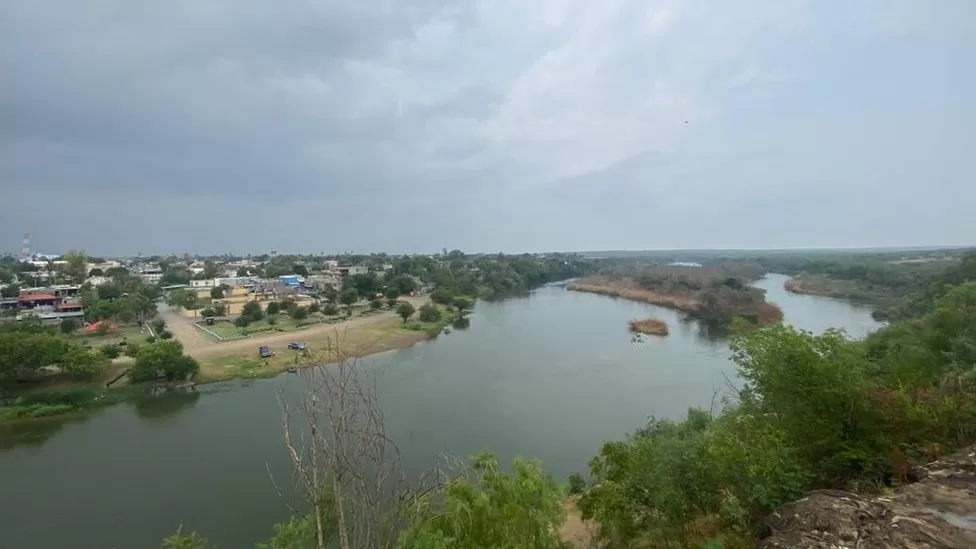
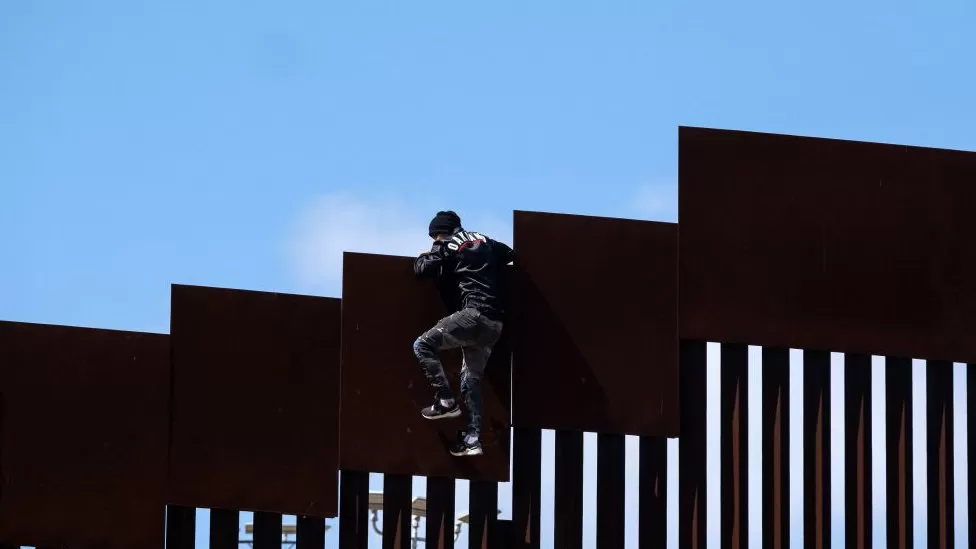
Even with tall, solid barriers, experts say they’re not completely impossible to get through. Migrants often figure out ways to climb over them using ladders, ropes, or even cutting through.
According to Adam Isacson from the Washington Office on Latin America, these walls are more like a delay. He thinks it might take a few extra minutes to get into the US, but it’s not a big obstacle. It’s harder for kids, elderly, or disabled people, and more accidents happen when trying to cross.
Isacson also points out that walls don’t matter if your plan is to surrender and ask for asylum, which has become the main reason for detaining migrants recently. When asylum seekers cross the border, they have the legal right to challenge being sent back.
People living near the border have mixed feelings about extending the wall. Some want a strong border but not necessarily a physical wall. Others might be open to the idea, but they’re worried about how it will be done.
Jessie Fuentes, an activist from Eagle Pass, used to fight against building walls on the border. But he eventually saw that the barriers were well-made and strategically placed. He believes fences have a purpose, especially if they help border control and provide a safe path for migrants to find shelter. However, he also thinks people shouldn’t think it solves everything.
Alex Garcia, who lives in Webb County near Starr County, thinks a barrier is necessary but worries about its impact on the environment and the safety of migrants trying to cross.
Building border “walls” is not new. Many recent US presidents, including Obama, have added or improved parts of the border. However, experts say these barriers haven’t had a long-lasting effect on migration trends and reasons why people come to the US-Mexico border.
Arturo Sarukhan, a former Mexican ambassador to the US, believes that you can’t solve migration problems just by enforcing rules. No matter the strong talk or political tactics, it won’t work. He says we can’t handle modern challenges with old-fashioned solutions. He thinks this will only lead to more profits for criminals smuggling people and make migration even more dangerous.
SOURCE:BBC