

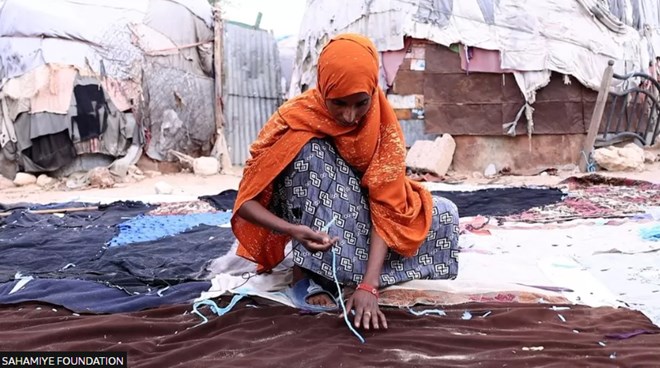
Hodan Artan is fixing her house’s roof, sewing colorful pieces of fabric with blue thread.
Hodan Artan cleans buildings in the capital of Somaliland, Hargeisa. She doesn’t earn much, so she lives in a simple house made of mud with a cloth roof. She’s 23 years old and takes care of her baby daughter.
Until recently, Hodan didn’t think she could aim for more in life. She couldn’t go to school when she was young because her family couldn’t afford it.
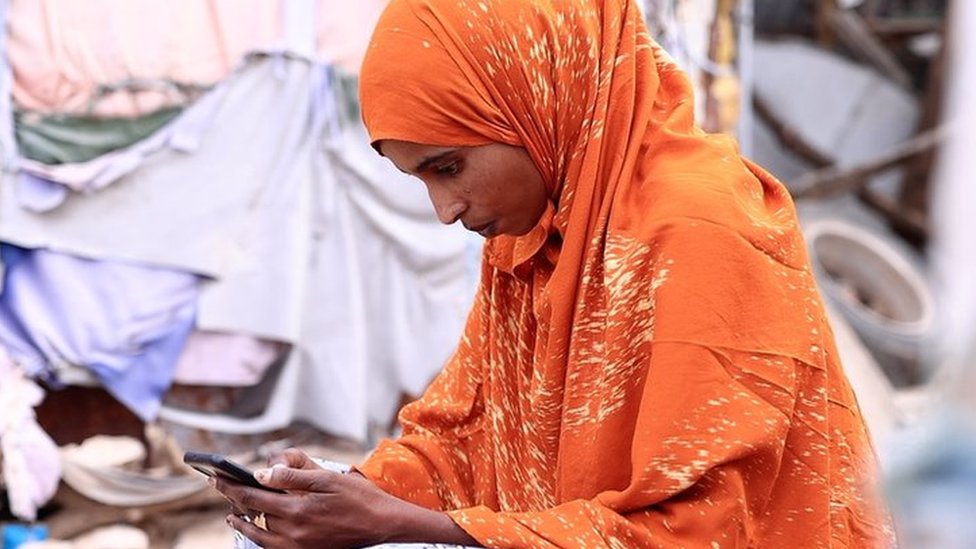
Hodan never learned to read or write. But a few months ago, she heard about an app called Daariz. This app has helped more than 410,000 people in the Horn of Africa learn these skills.
Her friends encouraged her to try it, so she started learning on her phone when she had free time. In just over two months, Hodan has made amazing progress. Now, she can read and understand some short stories in Somali.
In Somaliland, many people like Hodan face the same problem – they can’t read or write. This region became independent in 1991 after a civil war. It’s not officially recognized as a separate country, but it has its own government and is more stable than the rest of Somalia. However, because of the war, a lack of basic services, and often not enough rain, Somaliland has one of the lowest rates of people who can read and write in the world.
A report from 2022 by UNICEF, a group that helps children around the world, says that about three out of four adults here can’t read or write. Also, one out of every four kids isn’t going to school.
In 2019, the Somaliland government and UNICEF said they would work together to improve education. They wanted to make sure more kids could go to school and finish at least their basic education.
But it’s been hard, and there are still many problems. Peter Quamo, who is in charge of education at UNICEF for Somalia, explains, “A lot of the people here are herders and live in the countryside. They are far away from towns, and some of them are always on the move. This is a challenge not just in Somaliland, but also in Somalia and South Sudan. Sometimes, it’s really tough to make sure these kids and their families can keep learning.”
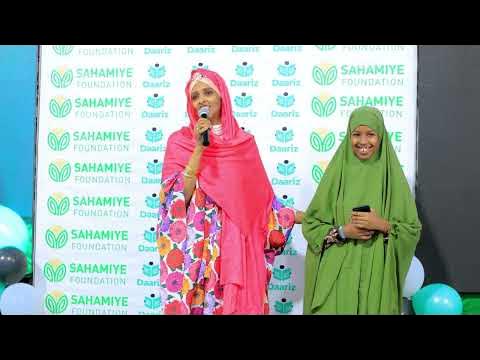
Lots of projects by local groups and groups from other countries are trying to find ways to help these kids. One man, Ismail Ahmed, and his charity, the Sahamiye Foundation, think they have a great plan.
Ismail Ahmed left Somaliland and went to the UK when he was young because he had to escape from a difficult situation. His life story is pretty amazing: he went to some of the best business schools in London and got a job at the United Nations. But he got fired after he said he saw people doing dishonest things in the organization. With the money he got from winning a case about being unfairly fired, he started a successful app for sending money, called World Remit.
Later on, he started the Sahamiye Foundation to help his community. During the COVID lockdown, while he was teaching his own kids Somali in London, he got the idea to use mobile phones to help people learn in Somaliland.
That’s how Daariz came to be. It’s a free app that can be used even without an internet connection. This means people in faraway places and people who are always moving around can still use it.
Ismail Ahmed is sure this is the way to help more people in the future. He says, “Before, we had to go to a classroom to learn our own language. Now, thousands of people have become able to read and write in their own language, all without going to a class.
About 10 kilometers outside Hargeisa, Mubaarik Mahdi takes his camels to graze.
When he was young, he only went to school for two years and doesn’t remember much.
Doing business became hard for him. Nowadays, most people use mobile payment apps like Zaad, and Mr. Mahdi had trouble reading his customers’ names on payment slips.
Now, while his camels eat in the field, Mr. Mahdi sits under a tree and slowly reads the words on his screen.
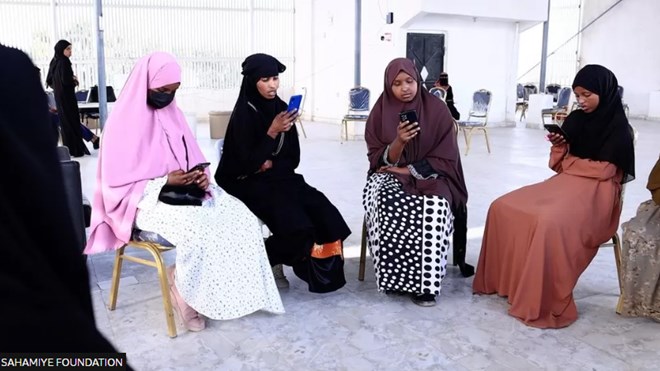
He says that learning on his phone has made him more confident when dealing with customers, and he’s even started buying books.
Back in Hargeisa, while she washes dishes in her employer’s kitchen, Ms. Artan says learning to read has changed how she sees things.
“I feel like I’m not the same as I was before,” she says proudly.
“For the future, I hope to find a more satisfying job than what I have now and use what I’ve learned to be successful.
SOURCE:BBC