

China’s Trade “Superweapon” Has Gone Quiet as LOGINK Faces Global Setbacks
Four years ago, the United States raised concerns about a Chinese digital system called LOGINK, describing it as a possible “trade superweapon” that could give China greater access to information about global shipping.
According to a new investigation by Reuters, however, LOGINK’s international ambitions have suffered a major setback.
LOGINK was created to make global shipping and trade easier. The system was designed to bring information from ports, customs authorities, shipping companies, and other transport services into one digital platform.
In simple terms, LOGINK was meant to work like a large digital information center for international cargo.
Instead of businesses and government agencies relying heavily on paperwork and separate systems, LOGINK aimed to allow them to share logistics information electronically.
But Reuters reports that the platform’s international expansion has now slowed dramatically.
What happened to LOGINK?
Reuters says its investigation involved interviews with more than 20 people in the shipping industry and government officials, as well as a review of court documents.
The investigation found that several of LOGINK’s international partnerships have stalled.
The platform also left an international maritime association after reportedly failing to pay its membership fees.
Its website has gone offline, while some of its international data-sharing projects have stopped operating.
Reuters also reported that LOGINK is facing legal and financial problems inside China.
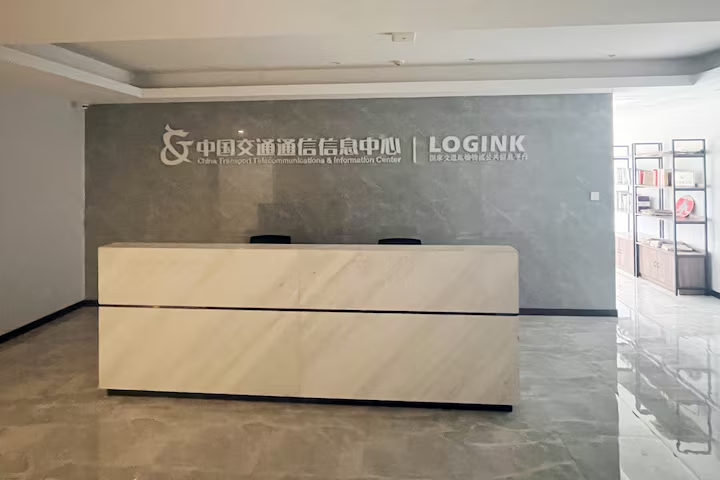
When a Reuters reporter visited LOGINK’s operations center in Wenzhou in September 2026, the office appeared largely abandoned.
The lights were off, the reception area was empty and computer cables had reportedly been removed.
Reuters said calls and emails to LOGINK were not answered.
China’s transport ministry also declined to answer Reuters’ questions.
Why was the United States worried?
The main concern in Washington was not simply about shipping technology.
US officials and security experts feared that a platform controlled by China could potentially give Beijing greater knowledge about international trade.
They were particularly concerned about information such as the amount of goods being shipped, shipping routes, prices and other commercial details.
There were also fears that information from commercial shipping networks could potentially reveal the movement of sensitive military supplies.
For example, some US officials worried that shipping data could provide information about military equipment being transported to countries such as Ukraine or Taiwan.
However, Reuters noted that LOGINK has not publicly explained exactly how much information it collected or the full scope of the data available through the platform.
A LOGINK official told the US Trade Representative’s Office in 2024 that the platform did not have the ability to collect sensitive commercial information or continuously monitor cargo movements around the world.
LOGINK was once seen as a major international project
LOGINK did not begin as a global project.
Reuters reports that it started about two decades ago as a local government project in China’s Zhejiang province.
The original goal was simple: improve the movement of goods by bringing information from ports, trucks and other businesses into one system.
The Chinese government later gave the project greater national importance.
China eventually began looking at ways to expand LOGINK internationally.
In 2010, China established a cargo data-sharing arrangement with Japan and South Korea.
LOGINK also later signed an agreement with a logistics platform based in Hong Kong.
At one point, the Chinese platform said the agreement could give it access to more than 90% of global ship-tracking information.
China’s transport ministry also presented LOGINK to a United Nations commission as a potential “one-stop” system connected to logistics information around the world, Reuters reported.
The ambition was therefore much bigger than simply helping Chinese companies move goods.
LOGINK was being positioned as part of a broader digital infrastructure for global trade.
The US began pushing back
The situation changed significantly around 2022.
US lawmakers and officials began publicly raising concerns about LOGINK’s growing international presence.
Reuters reported that American policymakers feared that unchecked expansion of the platform could give China too much influence over the digital information supporting international trade.
The US government subsequently took steps to limit LOGINK’s use within its own government and critical port infrastructure.
Congress also passed legislation restricting the Pentagon from entering into contracts with companies connected to LOGINK.
US officials also encouraged America’s allies and international partners to be cautious about using the Chinese system.
This pressure appears to have created difficulties for LOGINK as it tried to expand overseas.
Japan and South Korea had a different view
Interestingly, Reuters reported that officials in Japan and South Korea said the information shared through their cooperation with LOGINK was more limited than some US officials feared.
According to the officials, the data mainly included information such as when ships arrived and departed and when cargo was loaded or unloaded.
They said the system did not provide detailed information about what was inside the cargo.
This is an important part of the story because it shows that concerns about LOGINK were not viewed in exactly the same way by every country.
While Washington saw potential national-security and economic risks, some Asian partners viewed the platform more as a logistics and information-sharing tool.
LOGINK’s international expansion begins to disappear
Despite its ambitious plans, Reuters found that LOGINK’s international activities began falling apart.
Its participation in the International Port Community Systems Association ended in 2024 after the company stopped paying membership fees, according to a person familiar with the matter.
LOGINK’s website also went offline around the same period.
Its cooperation with Japan and South Korea also weakened.
China reportedly cancelled a meeting scheduled for March 2024, saying it was due to “internal circumstances.”
No further meetings have been held since then, according to South Korea’s oceans ministry.
Japan later lost access to LOGINK data and was reportedly unable to contact its Chinese counterparts.
The company’s attempts to build relationships with European ports also produced little progress.
Portugal’s Sines port signed an agreement with LOGINK in 2017 to explore possible data-sharing cooperation.
But according to Reuters, the agreement produced no significant results.
A similar agreement involving Portbase, the digital system supporting the Port of Rotterdam, also failed to move beyond early discussions.
LOGINK is also facing problems inside China
The problems are not limited to LOGINK’s international operations.
Reuters reported that the commercial company behind LOGINK’s Wenzhou operations has faced at least 39 court cases since January 2024.
The claims reportedly total around $1.3 million.
Some cases involve labour disputes, while others appear to concern unpaid bills and services.
One case involved a local China Mobile subsidiary, which sued LOGINK in 2025 over a service contract dispute.
Reuters reported that a court later ordered LOGINK to pay the telecommunications company.
The company also appears to be involved in a dispute over the lease of its office space.
All of this paints a very different picture from the powerful international logistics platform that American officials were worried about several years ago.
A trade superweapon that never became what many feared?
This is perhaps the most interesting part of the story.
Four years ago, LOGINK was being discussed as a possible tool that could give China significant influence over global trade information.
Today, according to Reuters’ investigation, its international expansion has largely stalled.
That does not necessarily mean that China’s ambitions in digital trade have disappeared.
China still has a major interest in controlling and developing technology connected to ports, shipping, logistics and global supply chains.
In fact, Reuters noted that China’s transport ministry issued a policy document in June calling for LOGINK to be connected to more domestic data sources.
This suggests that LOGINK may be shifting its focus rather than simply disappearing completely.
What this means for global trade
The LOGINK story shows how important digital information has become to international trade.
Ships, ports, customs authorities and logistics companies now depend heavily on digital systems.
Controlling or influencing these systems can potentially provide economic and strategic advantages.
That is why the United States and China are competing not only over ships, ports and factories but also over the technology and data behind global trade.
Reuters’ investigation suggests that US pressure may have helped slow LOGINK’s international expansion, although Reuters said it could not establish exactly why the platform fell into its current financial and legal difficulties.
The biggest lesson may be that control of information can be almost as important as control of physical infrastructure.
For now, the Chinese platform once viewed by Washington as a possible global trade “superweapon” appears to have lost much of its international momentum.
But the wider battle over who controls the digital systems behind global shipping is far from over.
Source: Reuters. This article is a simplified and independently written summary based on reporting by Reuters, including its investigation published on October 5, 2026.