

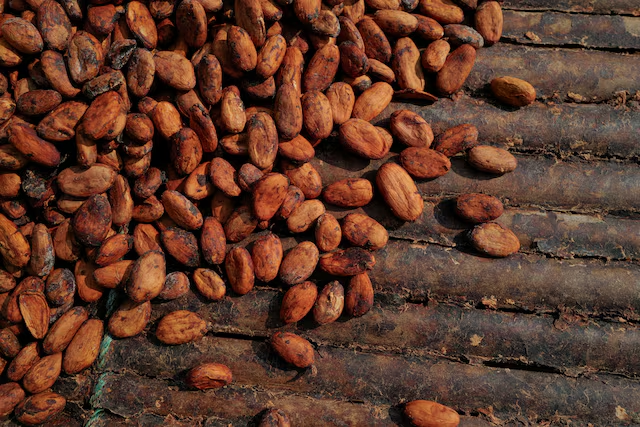
Ghana’s cocoa industry is facing serious money problems, and many cocoa buyers do not have enough cash to buy beans from farmers. According to Reuters, this is happening even after the government recently reduced the official price it pays cocoa farmers.
Earlier this month, the government cut the fixed cocoa price by nearly 30%. However, Reuters explains that the new price is still higher than the current world market price. Ghana now pays farmers about 41,392 cedis per metric ton, which equals around $3,797. Meanwhile, the global cocoa price is about $3,200. Because of this price difference, international buyers are not interested in purchasing Ghana’s cocoa.
Reuters reports that this pricing problem has already caused at least 50,000 tons of cocoa beans to remain unsold at ports. The country’s cocoa regulator, Ghana Cocoa Board (COCOBOD), lowered prices hoping to fix the situation, but new problems have appeared.
Sources inside Licensed Buying Companies (LBCs) told Reuters that many buyers simply do not have money to continue purchasing cocoa from farmers. According to Reuters, funds recently released by COCOBOD were used to pay old debts instead of helping buyers purchase new cocoa.
COCOBOD says it has released 4.2 billion cedis (about $385 million) since November to pay money owed to farmers. But Reuters spoke to farmers and local cocoa clerks who say they have still not received their payments.
One farmer, Ebenezer Asiful, told Reuters he has been waiting four months to be paid for cocoa he already supplied. He said farmers feel neglected and do not understand why payments are delayed.
Another farmer, Joseph Prenya, also told Reuters that many cocoa clerks are refusing to accept more cocoa beans because they have no money. Farmers now travel from town to town looking for any buyer who still has cash.
Reuters further reports that opposition politicians are warning that Ghana may be forced to reduce farmer prices again if the mismatch with global prices continues. However, COCOBOD officials insist that prices will not be reduced again this season.
Jerome Sam, Head of Public Affairs at COCOBOD, told Reuters that although some buyers lack funds, others are still operating. He stressed that farmer prices will remain unchanged despite global market movements.
A cocoa trade executive at an international commodities company told Reuters that COCOBOD’s financial problems are growing. According to Reuters, the regulator is struggling with unpaid bills and rising debts, and these problems may continue as long as Ghana keeps farmer prices higher than world prices.
In addition, an association representing cocoa buying companies has admitted owing local banks about $750 million. Reuters says these loans were taken to finance cocoa purchases. The association is now advising members to pay farmers first before repaying banks.
Unique Perspective
This situation shows a difficult balancing act for Ghana. On one hand, the government wants to protect farmers by keeping cocoa prices high so they can earn more money. On the other hand, Reuters highlights that setting prices above the world market makes it harder to sell cocoa internationally.
If buyers cannot sell cocoa easily, they also cannot get money to pay farmers. This creates a painful cycle: farmers are promised good prices but struggle to get paid, buyers run out of cash, and cocoa piles up unsold.
In simple terms, a high price is good only if someone is willing and able to pay it.
The report by Reuters suggests that Ghana’s cocoa sector may face increased financial pressure unless global prices rise or the government finds more effective ways to support both farmers and buyers.
Credit: Reuters