

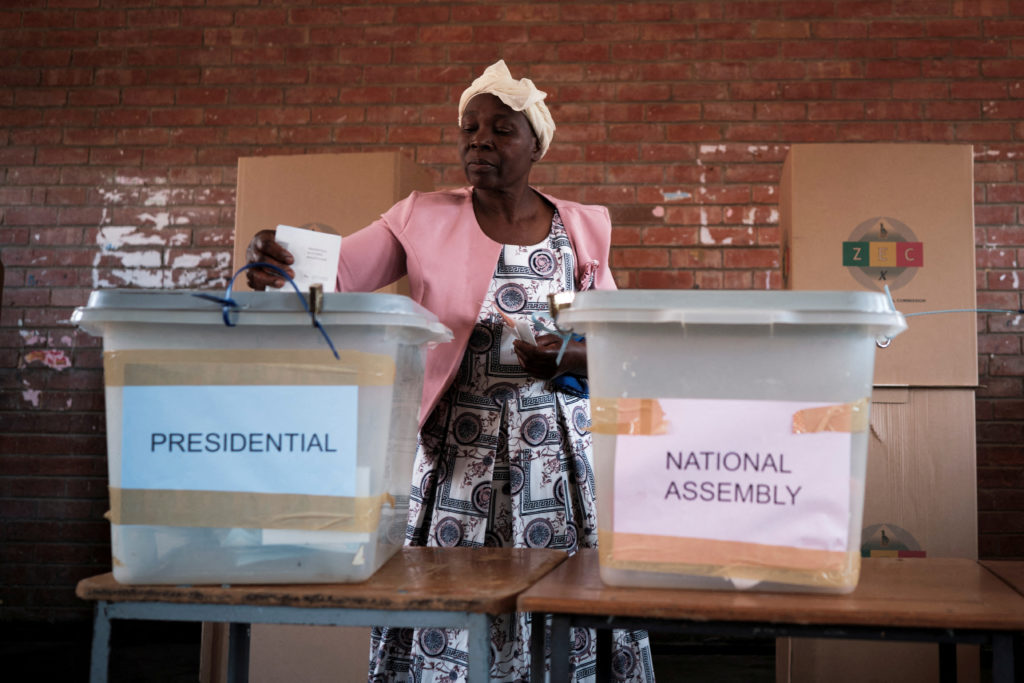
Chaotic situations were seen at polling stations in Zimbabwe. Ballot papers arrived very late, sometimes up to 10 hours after they were supposed to, causing them to run out. This led to the suspension of voting in many places, especially in big cities like Harare.
At a polling station in Harare called Haig Park Primary School, there was a lot of pushing and shouting. People were upset with the election officials and police because they were told to come back the next day since there were no more ballot papers for the local council elections.
People who had been waiting since early morning shouted together, saying they wouldn’t leave and would stay there overnight.
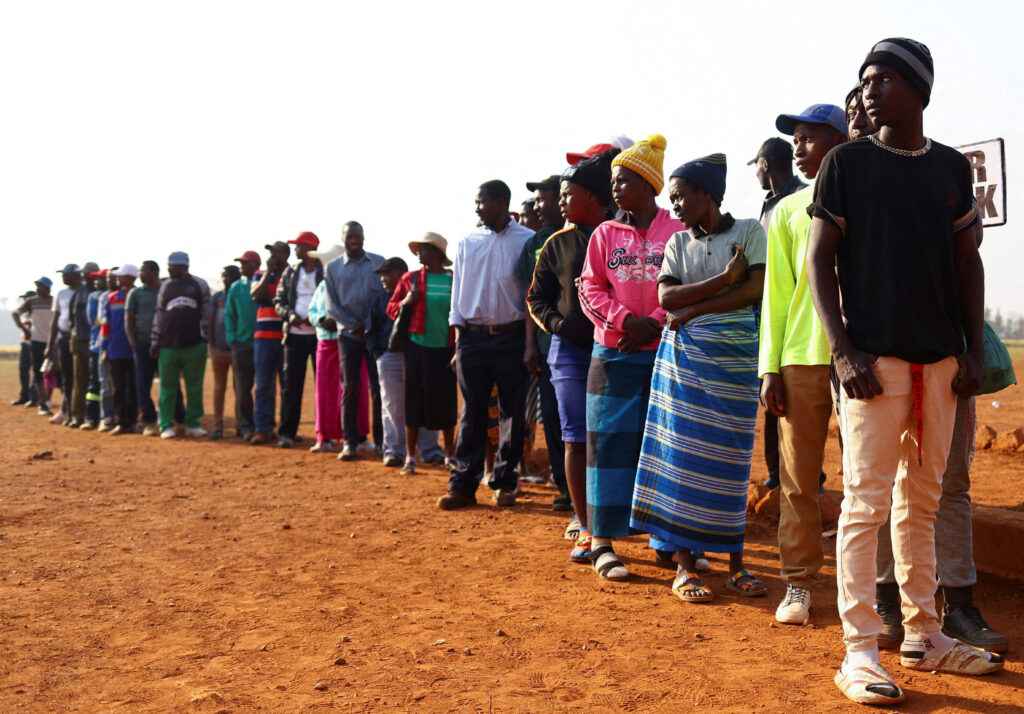
By 7 p.m., when voting was supposed to end, some stations still hadn’t received any ballot papers. Cathrine Nyakudanga, who had her 6-month-old baby with her, said she had waited since 7 am to vote, and she didn’t mind waiting a few more hours.
People were upset to see elderly people and women waiting for a long time without food or water. Stanley Gwanzura, a well-known local gospel singer, felt sad about this. Some people waiting in line made fires to cook meat for dinner.
This is the second time everyone is voting since Robert Mugabe, who ruled for a long time, was removed from power in 2017 through a sudden takeover.
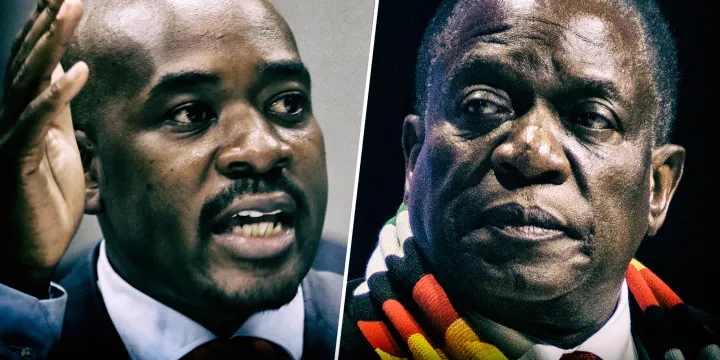
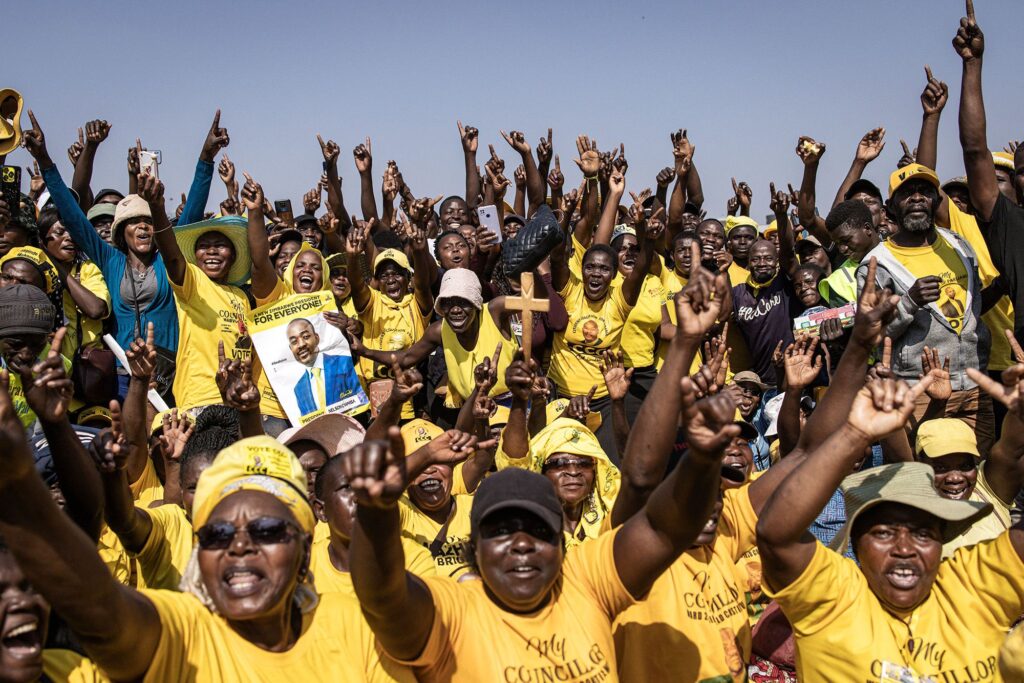
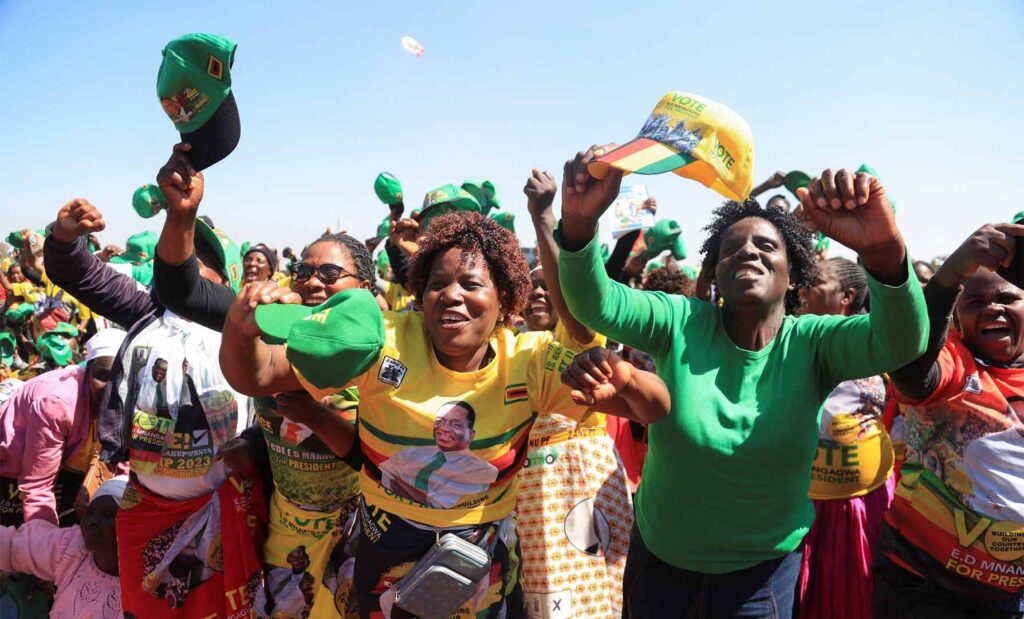
There are twelve people running for president, but the main competition is expected to be between two candidates: 80-year-old Mnangagwa, known as ‘the crocodile,’ and 45-year-old opposition leader Nelson Chamisa. Mnangagwa narrowly won against Chamisa in a disputed election in 2018.
Chamisa wants to break the ruling party’s control, which has lasted for 43 years. Since gaining independence from white minority rule in 1980, Zimbabwe has only had two leaders.
If no candidate wins most of the votes in the first round, there will be another vote on October 2. This vote also decides who gets to be in the 350-seat parliament and in almost 2,000 local council positions.
Basil Chendambuya, who lives in a working-class neighborhood in Harare, said life is getting harder in the country. He hopes things will change. He’s voted twice before and hopes that this time his vote will make a difference.
He mentioned that his two adult children are working low-paying jobs and barely getting by.
Zimbabwe, a country in southern Africa with 15 million people, has a lot of valuable minerals, including the biggest amount of lithium, which is important for electric car batteries. However, many people have said that corruption and mismanagement have taken away much of the country’s potential.
The head of the European Union’s observer team, Fabio Massimo Castaldo, said that about 30% of the polling stations in Harare had significant delays in opening. This was often because they didn’t have the necessary materials, especially paper ballots.
A group called the Zimbabwe Elections Support Network, which is not part of the government, said that the delays were mostly in urban areas where the opposition is stronger.
The election commission in Zimbabwe admitted that some polling stations got their ballot papers late. They said this was because of printing problems caused by many court cases. Both the governing party and the opposition had brought many cases to court about who could run in the presidential and parliamentary elections.
Chamisa said that people in rural areas were scared, but he told his supporters to be patient. He believes they are going to win, and that’s why the other side is worried.
Before the election, groups opposing the government and human rights organizations like Human Rights Watch and Amnesty International accused Mnangagwa of trying to stop people from speaking out. This was happening while there were problems with money, food prices going up, the public health system getting worse, and not enough regular jobs.
After voting, Mnangagwa said he was sure he would win. He encouraged people to be peaceful.
Mnangagwa used to be a close friend of Mugabe and was his vice president. They had a fallout in 2017 during a coup. Mnangagwa claims he’s making positive changes, but many think he’s even stricter. Zimbabwe has been facing sanctions from the US and EU for 20 years due to claims of human rights abuses, which the ruling party denies. Mnangagwa talks like Mugabe, blaming the West for trying to overthrow him. The Carter Center was supposed to watch the elections, but many of its members weren’t allowed. People critical of the government, like activists and journalists, were also denied permission. The US State Department criticized this decision by Zimbabwe.